
Pro Plumbers · 24 November 2026
How does weather compensation control heating?
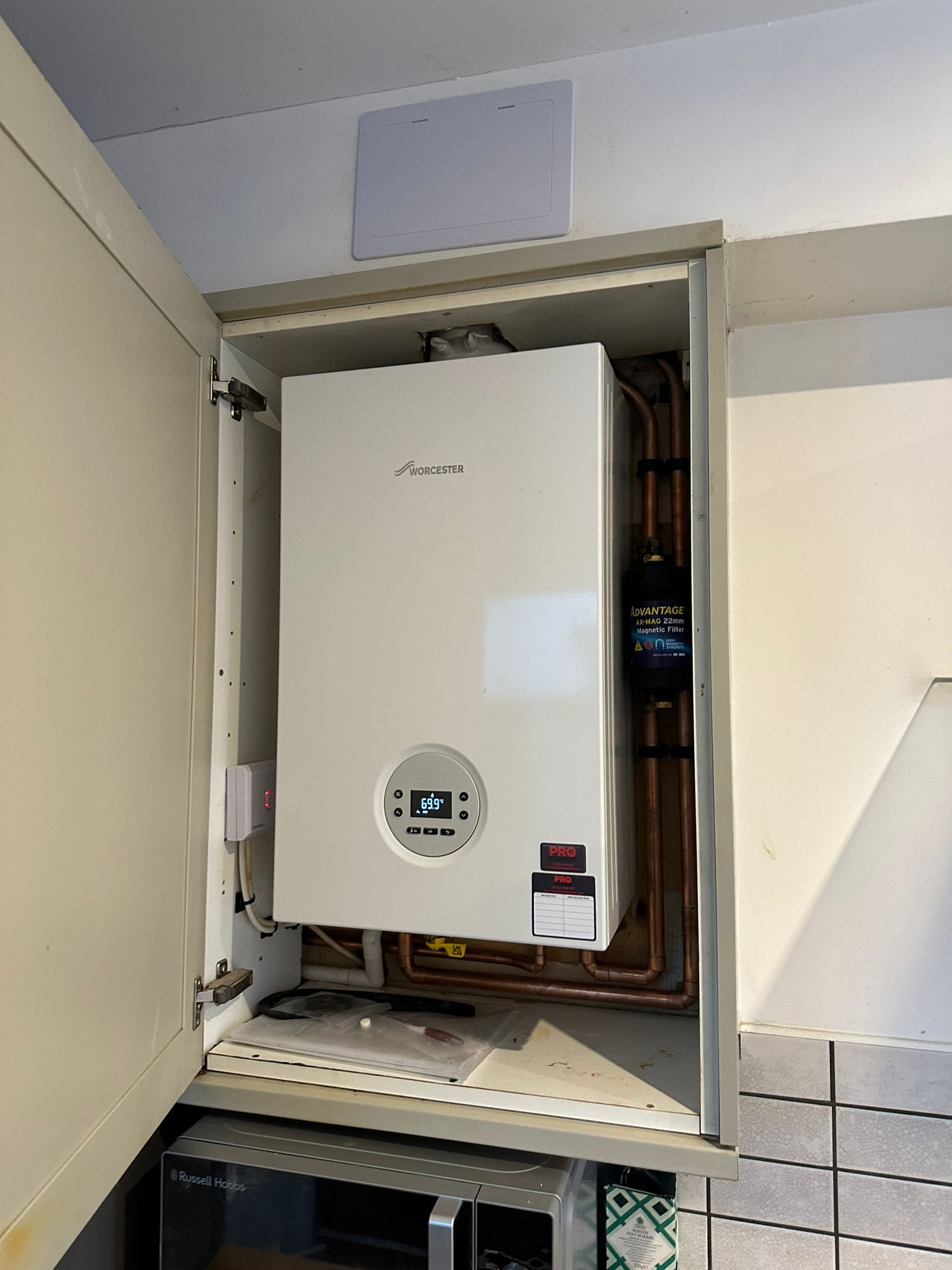
Weather compensation changes the temperature of the water sent through the heating system in response to the temperature outside. Instead of using the same heating water temperature in all weather, a compatible control asks for warmer water when outdoor conditions are colder and cooler water when the building needs less heat.
It does not forecast tomorrow's weather or replace the need for a well-designed heating system. Its purpose is to match heat delivery more closely to changing demand. This guide explains the principle, the information an installer needs and the difference between sensible owner adjustments and technical settings that should be left to someone familiar with the equipment.
The outdoor sensor provides a different signal
A room thermostat reacts to conditions at its location indoors. An outdoor sensor measures the weather affecting the building, allowing the controller to alter the heating water temperature before room temperature has moved very far. These are different signals, and compatible systems may use both. The precise balance depends on the appliance and controller.
Sensor positioning matters. Direct sunshine, heat from an outlet or an unsuitable sheltered spot can give a misleading reading. Installation instructions specify where it belongs. A homeowner can note an obviously implausible displayed outdoor temperature, but should not move the sensor or alter wiring to test a theory. That observation is useful for a control assessment.
A heating curve links weather to water temperature
The relationship between outdoor temperature and requested heating water temperature is often described as a heating curve. A steeper curve increases water temperature more strongly as the weather turns cold. A different starting level shifts the relationship. The suitable curve reflects the building's heat loss and the ability of its radiators or other emitters to warm the rooms.
There is no universal setting to copy from a neighbour. One building may hold heat well while another loses it quickly. Overshooting the curve can make rooms too warm; setting it too low can leave them uncomfortable in cold conditions. Commissioning is about finding an appropriate relationship, then observing how the home responds rather than chasing one impressive display value.
Lower water temperatures can support efficient operation
A condensing boiler can make better use of heat in the flue gases when return water is sufficiently cool for condensation to occur. Where the system can meet the building's needs with lower heating water temperatures, weather compensation can support that operating condition. It does not promise a particular saving or remove the need for correct installation and maintenance.
The radiators still have to release enough heat at the chosen water temperature. Small emitters or high building heat loss may limit how low the temperature can go comfortably. This is why advice about reducing temperatures should be tied to system assessment. A cold room is not evidence that weather compensation never works, but it does need investigating.
Room controls and radiator valves still have roles
Weather compensation is not usually a separate heating schedule. Timers determine when heating is available, while room controls and radiator valves may help limit temperature in occupied spaces. How those devices interact depends on the supported control arrangement. An incompatible combination can create competing instructions or leave the boiler unable to recognise what the rooms need.
Our smart thermostat guide covers room-based control choices. Smart features and weather compensation are not interchangeable labels. When comparing products, ask whether the proposed controller communicates with your exact boiler in the required way, not merely whether it can switch the heating on from a phone. Existing wiring and zoning must also be considered.
Check hot water arrangements separately
A system serving a hot water cylinder may require a different water temperature when reheating stored water from the temperature used for space heating. Suitable controls and system design manage those demands appropriately. Turning down an unidentified setting could interfere with hot water operation, so do not assume every temperature on the display is a weather compensation adjustment.
Identify whether you have instant hot water or a stored cylinder before discussing changes. Our boiler arrangement comparison helps with that distinction. The installer should explain what the outdoor sensor controls, what remains fixed or separately managed and which owner settings are safe to use. Cylinder safety controls are not experimental adjustment points.
Compatibility comes before buying an accessory
An outdoor sensor on its own does not establish that the existing boiler supports weather compensation. The appliance, controller, communication method and system layout must work together. Some installations need a specific manufacturer-supported control arrangement. Similar-looking terminals or product names are not enough to establish compatibility, and there is no safe generic wiring instruction for every home.
Record the model of the boiler and current controller from accessible labels or paperwork. Mention separate heating zones, underfloor heating and any cylinder. A heating engineer assessment can examine the arrangement before you buy accessories. Work involving boiler internals, gas components or electrical connections is not a homeowner installation exercise.
Judge comfort over changing conditions
A weather-responsive system may feel different from one that sends very hot water to the radiators in short bursts. Panels can remain gently warm for longer while rooms stay comfortable. Touching a radiator is therefore a poor measure of whether the controls are doing their job. Room temperature and the ability to meet the schedule are more useful observations.
If comfort is poor, record the outdoor conditions, affected rooms and whether the problem follows a schedule change. Avoid altering several settings together, because that makes the cause harder to identify. Only use adjustments permitted by the owner instructions. Report rooms that remain cold and rooms that overheat separately, as they may need different circulation or emitter checks.
Discuss a control change with the system in view
Weather compensation is best considered as part of the whole heating arrangement, not a shortcut around insulation, radiator sizing or circulation faults. Ask what equipment is supported, how the curve will be established and what explanation you will receive about everyday operation. Keep the instructions with the boiler paperwork so future changes remain understandable.
For an existing control fault, see thermostat repair; for wider changes, see central heating installation. You can send Pro Plumbers your boiler and control details or call 01732 444555. Describe your comfort problem first, then discuss whether weather compensation is a suitable option for that system.