
Pro Plumbers · 26 November 2026
Water softener or water filter: what is the difference?
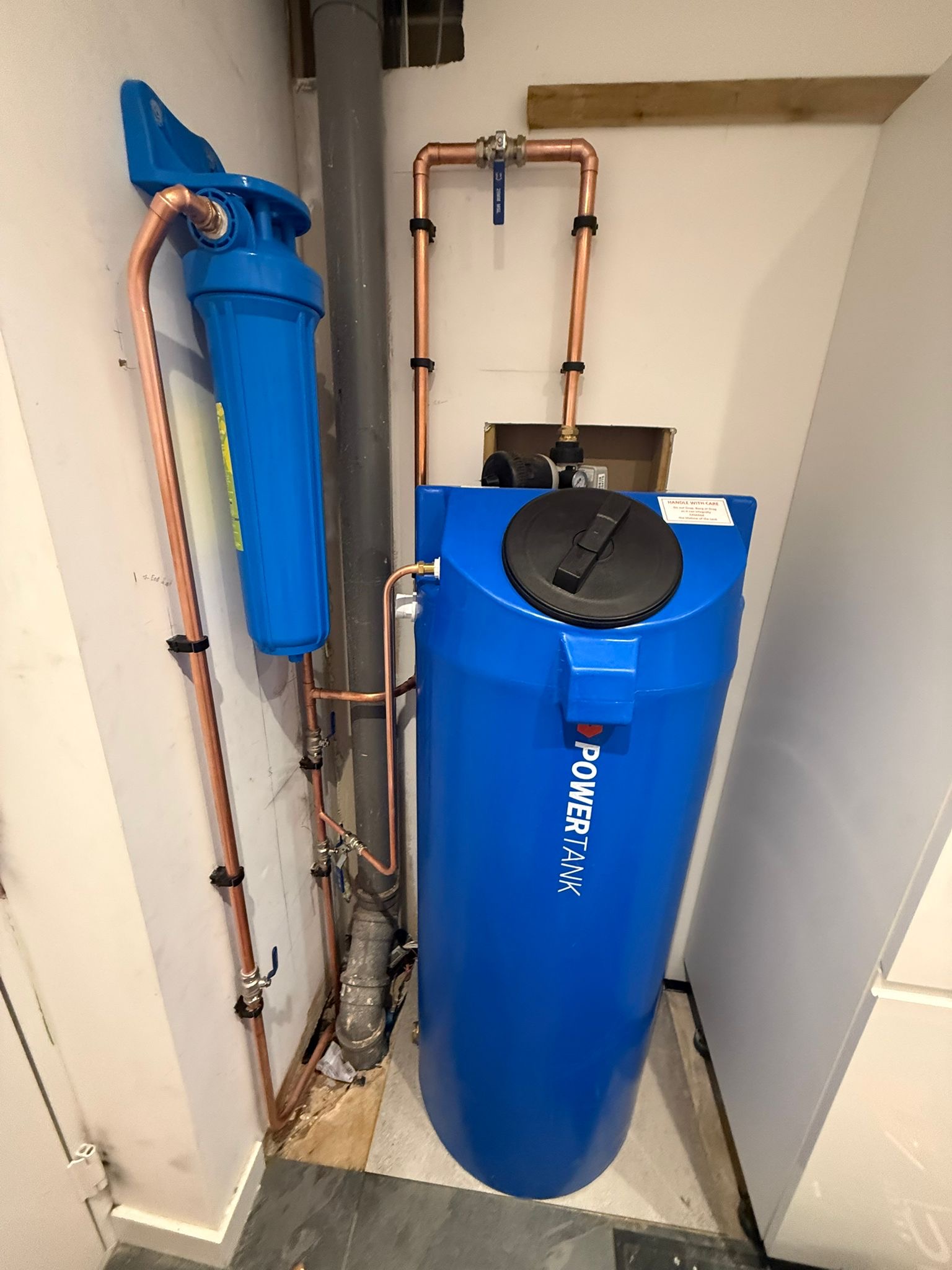
A water softener and a water filter are often discussed as if they were two versions of the same appliance. They are specified for different purposes. A softener addresses hardness minerals that contribute to limescale, while a filter may be selected to reduce particular tastes, odours or other substances according to its design.
The right starting point is the water problem you want to solve, supported by appropriate testing and product information. No single device should be assumed to improve every aspect of household water.
Hardness and limescale are a specific problem
Hard water contains dissolved minerals that can form scale when water is heated or dries on surfaces. You may notice deposits around taps, shower outlets and kettles, or scale-related maintenance issues in appliances. These observations describe hardness effects rather than a general failure of water quality.
Our hard water and limescale guide explains where those deposits appear. If scale reduction is the main goal, discuss whether a correctly specified softener suits your plumbing and household use.
A softener changes hardness, not every impurity
A conventional domestic softener uses an ion-exchange process to address hardness minerals. It needs a suitable installation location, drainage, power where required by the design and ongoing replenishment of the appropriate salt. It is not simply a cartridge fitted to one tap.
Softening should not be presented as removing every possible contaminant or making all other filtration unnecessary. Product performance and suitability must be considered separately. A water test and a clear objective are more useful than choosing equipment because a neighbour has one.
Filters are selected for particular treatment goals
A drinking-water filter may be chosen for taste or odour reasons, while other filter designs address different specified substances. Performance depends on the actual cartridge or media, the flow conditions and correct maintenance. The word filter alone says very little about what a product does.
Ask which claims are supported by the manufacturer's documentation and what replacement schedule applies. Our water filtration and treatment service starts with water conditions and usage so the specification can match the intended purpose.
Point-of-use and whole-house treatment differ
A filter serving one kitchen tap addresses only that outlet. A softener or another whole-house device may be installed on a wider supply, subject to the plumbing design. That difference affects cost, space, maintenance and which taps or appliances receive treated water.
Decide where you want the benefit before comparing products. If the issue is limited to drinking-water taste, a whole-house approach may be unnecessary. If scale throughout the hot water system is the concern, a single drinking filter cannot solve it.
Drinking-water arrangements need deliberate planning
Discuss which tap will supply drinking and cooking water and how the installation should be arranged. Follow current product instructions and applicable water-regulation requirements. Do not assume that every softened outlet or every filter configuration is intended for the same use.
A separate drinking tap or a particular bypass arrangement may be considered depending on the system and preferences. The installer should explain the final layout clearly. Avoid making health claims for either technology; this decision is about documented performance and suitable plumbing.
Maintenance responsibilities are not the same
A softener needs the correct salt and attention to its operating instructions. A filter needs timely cartridge or media replacement according to its specification and actual conditions. Ignoring either routine can undermine the result the equipment was chosen to provide.
Ask what owner tasks are required, how often components are likely to need attention and what signs indicate a fault. Our water softener overflow guide covers one specific warning sign. Water where it should not be is never a normal maintenance task to ignore.
Some homes may discuss both technologies
If you want scale control and a particular drinking-water treatment goal, separate devices may be considered as part of one plan. Their order, connections and maintenance must be compatible. Combining products without a design can create unnecessary complexity or unsuitable flow conditions.
Write down the outcomes you want at each outlet and have the water assessed before deciding. A survey can also identify existing pressure, storage and access issues that affect the installation. Do not buy several cartridges online on the assumption that more treatment stages automatically mean a better result.
Choose after testing and a practical survey
Describe whether your priority is scale, taste, odour, appliance protection or something else. Provide details of the boiler or cylinder, available installation space and the outlets you want treated. Any unvented cylinder alterations require a G3-qualified installer.
Ask for the expected owner routine to be demonstrated before committing. Salt storage, cartridge access and drainage can be inconvenient in the wrong cupboard. Check where isolation and bypass arrangements will sit so future servicing does not require removal of permanent shelving.
Keep product documents and replacement information with the installation record. If taste, odour or colour changes suddenly, do not assume a treatment device must be the cause or the cure. Stop experimenting with settings and seek advice about the actual supply and plumbing symptoms.
A survey can also reveal whether a simple maintenance issue is being mistaken for a treatment requirement. For example, an existing scaled outlet needs appropriate cleaning or repair regardless of any future equipment. Treating incoming water does not remove every deposit already present inside fixtures and appliances.
Contact Pro Plumbers about water softening or filtration, or call 01732 444555. We can discuss testing, equipment location and maintenance before specifying a route. If the immediate issue is weak flow rather than water quality, our low water pressure guide is a more relevant starting point.