
Pro Plumbers · 24 November 2026
Why is water overflowing from my water softener?
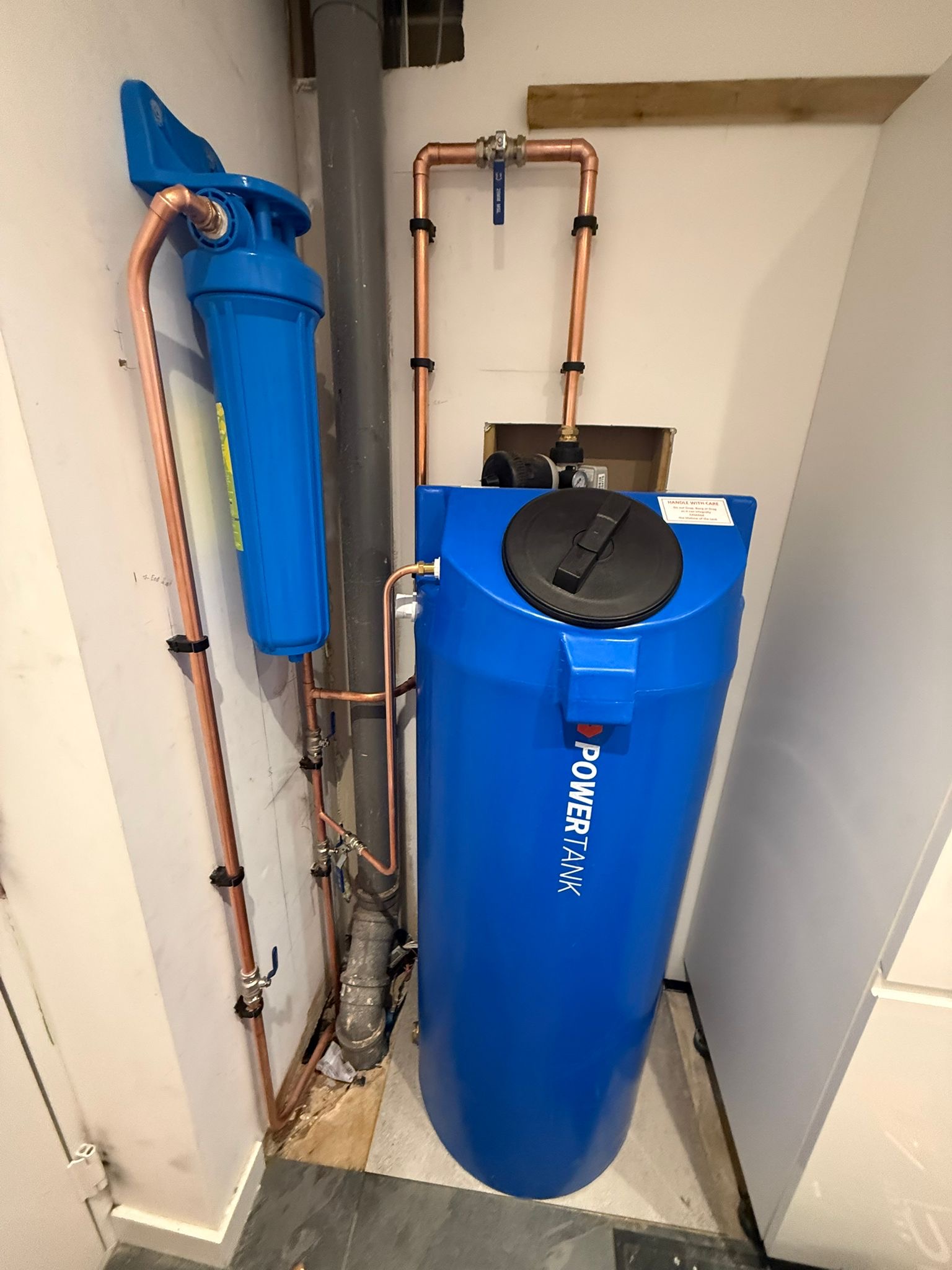
A water softener can send water to its drain during its intended operating cycle. Water overflowing from its salt cabinet, leaking onto the floor or leaving a separate overflow pipe is a different observation. The location and timing matter because not every discharge is part of normal regeneration. Do not assume the cabinet should simply be topped up with more salt.
This guide concerns unexpected water escape from an installed softener. It does not prescribe internal repairs or universal settings: models differ, and the instructions for the exact appliance are essential. Establish what is wet before deciding whether the softener, its drain connection or the nearby plumbing needs attention.
Locate the escape without opening the control head
From a dry, safe position, note whether water is over the cabinet rim, running down an external fitting or appearing at the drain route. Some models have a salt compartment that users may access under their instructions, but the control head and electrical components are not equivalent owner-access areas.
Do not reach into a wet cabinet to search for a valve. If a socket, plug, power supply or wiring has become wet, stay clear and seek advice. Taking an external photograph is preferable to removing panels. Include the floor and nearby connections, because a leaking supply joint above the appliance can make the softener appear responsible when water is actually tracking down from elsewhere.
Normal drain flow belongs to a specified cycle
A softener may use water during regeneration to restore its treatment medium, then discharge through its designed drain. The timing, sequence and amount depend on the model and settings. Continuous unexplained flow or cabinet overflow should not be accepted as normal simply because regeneration involves water.
Look at the user display and owner's documentation without starting another cycle. Record any stage indication or error message already visible. Do not interrupt and restart regeneration repeatedly to see if it clears the problem. The hard water and limescale guide explains what softening does; it does not make every discharge from a treatment appliance safe or expected.
Salt cabinet water levels are model-dependent
Different softeners manage water in the salt compartment differently. Some retain visible water, while others have a different cycle arrangement. A photograph of another model is not a reliable target level for yours. Unexpected rising water, loss through the overflow or water reaching the rim needs checking against the appliance instructions.
Do not scoop out brine, add chemicals or refill the cabinet with tap water to copy an online demonstration. Removing water may temporarily hide the symptom without correcting the cause. Keep salt packaging available if a recent change seems relevant, but do not assume a particular salt product caused the fault. Record whether the level changed suddenly, after a refill or during an identified operating stage.
Drain and overflow routes perform different roles
The intended regeneration drain and a cabinet overflow may be separate connections. Their routing, support and termination need to match the installation requirements. A restricted, displaced or incorrectly arranged drain can affect operation, while an overflow is not a substitute drain to be used continuously.
Do not cap either pipe to keep the floor dry. That can force water elsewhere and remove the route provided for discharge. Avoid pushing a loose pipe into an arbitrary waste fitting or joining it directly to another pipe without understanding the required separation and protection. Our water filtration and treatment page is a relevant starting point for discussing the installed arrangement, including its relationship with the household supply.
The control and water-handling components need proper diagnosis
A softener relies on components that direct water through its intended stages and manage the cabinet supply. A fault, restriction or control problem can prevent the expected sequence. These are possible explanations, not a parts list to replace in order until the overflow stops.
Leave internal valves, floats and tubing untouched unless the owner's instructions specifically describe a safe user action for your model. Do not adjust hidden settings or clean internal components with improvised tools. Give the model reference, any error indication and the discharge timing to the person assessing it. That information helps distinguish a plumbing connection issue from an appliance-specific problem without claiming every softener uses the same mechanism.
Bypass and isolation must follow the actual installation
Some installations have a clearly identified bypass arrangement that lets household water avoid the softener. Its use and valve positions should follow the appliance instructions or specific competent advice. A row of similar handles is not enough information to safely turn them experimentally, particularly on a shared or altered supply.
If water is actively escaping, ask for guidance on safe isolation. Our main stop tap guide provides background on the household supply. Do not force old fittings or assume switching off the softener electrically shuts off incoming water. The water connection and electrical operation are different, and stored liquid can remain after a supply is isolated.
Prevent further damage without disguising the symptom
Move dry belongings from the affected area where it is safe to do so. A container can catch an accessible drip if it does not strain the appliance or its pipes. Keep children and pets away from spilled treatment water and do not use the cupboard while electrical safety is uncertain.
Do not resume normal cycles simply because the floor has been dried. Note where water appeared and whether the cabinet level is still rising from a safe viewing position. Our water leak service page covers escape-of-water enquiries. Mention any neighbouring leak or recent plumbing work, rather than assuming the fault must be internal because the softener is the most visible appliance in the cupboard.
Ask about the appliance and installation together
Keep the make, model, user manual and installation details available. Describe whether overflow happens during regeneration, continues between cycles or started after a change. Include photographs of the visible drain and overflow routes without disconnecting them. Tell us about any wet electrical equipment before discussing ordinary servicing.
Contact Pro Plumbers about the softener overflow and its pipework, or call 01732 444555. The enquiry can establish the relevant plumbing scope and what model-specific attention may be needed. It should not assume that adding salt, replacing the whole appliance or altering household pressure is the answer. Leave discharge routes open and unfamiliar controls unchanged while the cause is assessed.