
Pro Plumbers · 24 November 2026
Hard water and limescale in Kent homes
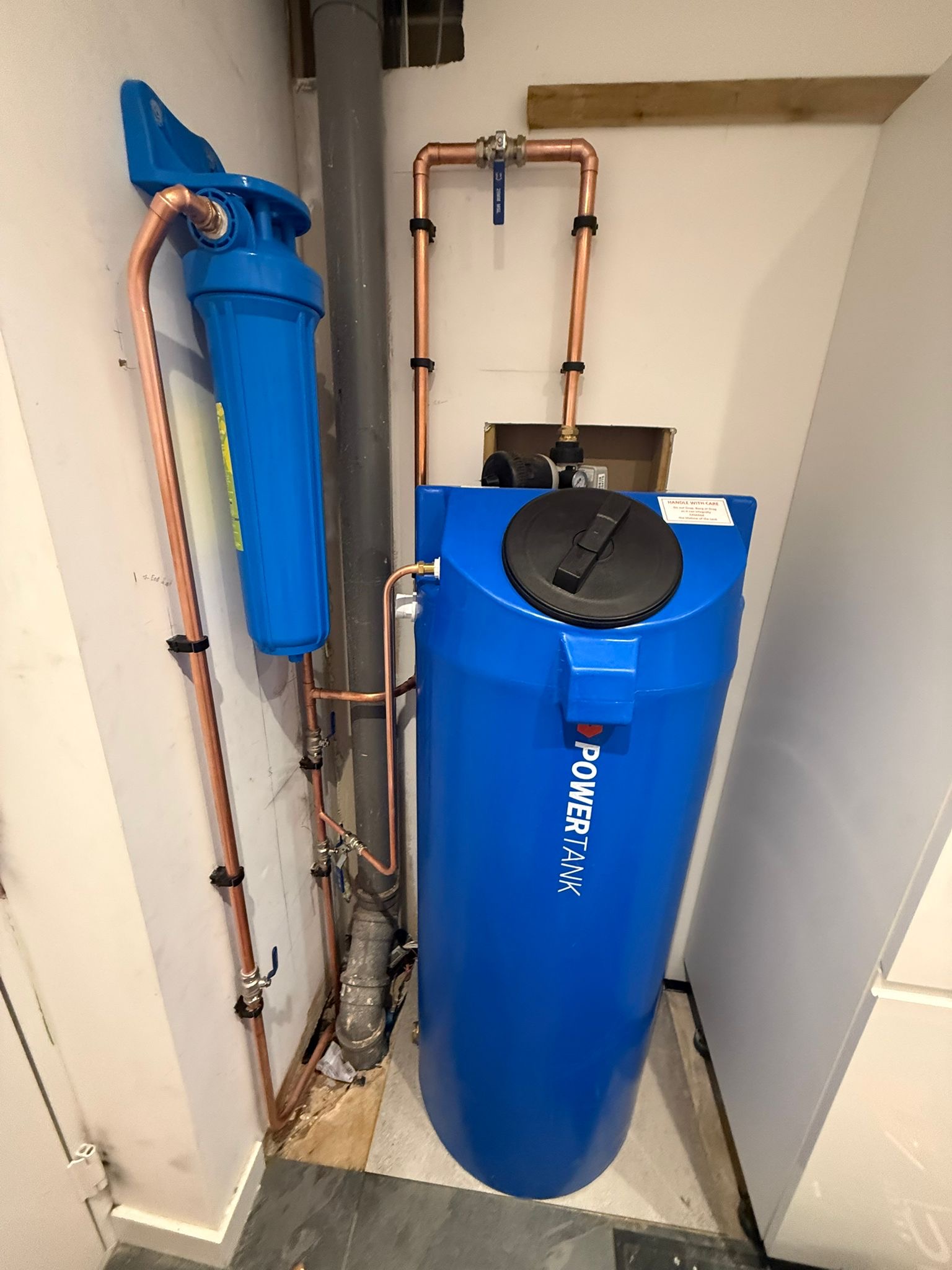
If your kettle grows a white crust within weeks and your shower glass is always spotted, you are seeing hard water at work. Much of Kent draws its supply from chalk aquifers, and water passing through chalk picks up dissolved calcium and magnesium. When that water is heated or evaporates, the minerals come out as limescale.
This guide explains what hardness means, where scale causes real trouble in a home, how it affects heating and hot water, and the treatment options that are available. Your water company publishes the hardness for your postcode, which is the best place to start.
What hard water actually is
Hardness is a measure of dissolved minerals, mainly calcium and magnesium. It is not harmful to drink and is not a sign of dirty water. The problems are practical: soap lathers less, scale builds up wherever water is heated, and white marks are left wherever water dries.
Water companies in the South East publish hardness figures online, usually searchable by postcode, so you can find out how hard your supply is before deciding on any treatment.
Where scale does the most damage
Anywhere water is heated suffers most. Kettles, immersion heater elements, electric showers, combi boiler heat exchangers and the hot side of taps all collect it. Scale insulates the heating surface, so the appliance has to work harder and can fail sooner. Our guide to an immersion heater not working covers one common result.
Combi boilers and hard water
In a combi boiler, mains water passes through a plate heat exchanger to make hot water on demand. In hard water areas, scale can narrow those plates over time. Symptoms include hot water that fluctuates in temperature, a boiler that is noisy when running a tap, or reduced flow. If you have lost hot water entirely, our article on no hot water from a combi explains the checks.
Boiler manufacturers often recommend scale protection on the incoming cold supply in hard water areas. The installation guide for your boiler sets out what is required.
Showers, taps and toilets
Shower heads clog and spray unevenly, and thermostatic shower valves can become sluggish as scale builds up inside. Tap cartridges stiffen and start to drip. Toilet fill valves slow down, and scale forms under the rim of the bowl. Regular cleaning with a suitable descaler keeps fittings working longer, though it treats the symptom rather than the water.
Options for treating the water
A water softener uses ion exchange to replace hardness minerals with sodium, giving genuinely soft water throughout the parts of the house it supplies. It needs space, usually under a sink or in a utility room, a drain connection and regular salt top-ups. Many people keep a separate unsoftened drinking tap in the kitchen.
Scale reducers and inhibitors fitted to the boiler supply do not soften water but are designed to reduce scale forming in a specific appliance. Filter jugs and under-sink filters improve taste and reduce scale in kettles but do not protect the wider system.
Choosing what suits your home
The right answer depends on how hard your water is, the type of boiler and hot water system you have, how much space is available and whether you want soft water throughout or simply to protect key appliances. A household with a new combi might prioritise scale protection on the boiler, while a larger home with a cylinder and several bathrooms may look at a full softener.
Our water filtration and treatment page explains the work we carry out on softeners and filters.
Signs scale is already causing a fault
Watch for a boiler that makes kettling noises, hot water that runs hot then cold, electric showers that cut out, or taps that will not close fully. If the boiler is involved, a boiler repair visit identifies whether scale is the cause. Gas boiler work must always be done by a Gas Safe registered engineer.
Cleaning scale safely
For taps and shower heads, a suitable descaler or a vinegar soak loosens most scale. Follow the product directions, rinse well and avoid harsh abrasives on chrome. Electric shower heads are usually easy to unscrew for cleaning. Never put descaling chemicals into a boiler or heating system yourself; scale inside appliances is a job for an engineer.
Kettles respond well to regular descaling, which also makes them boil faster.
In practice, many households combine approaches: descaling showers and kettles regularly, protecting the boiler with a scale reducer, and considering a softener when a larger project comes along. There is no single right answer, and the best choice is the one that fits your water, your system and the way you use it.
Softened water and drinking water
Softened water contains more sodium than unsoftened water. That is why softener installations commonly leave a kitchen tap on the unsoftened supply for drinking and cooking. Guidance on softened water and baby feed or low-sodium diets is available from health sources and water companies, so check that if it applies to your household. The softener installation should follow Water Regulations, including suitable backflow protection.
If you are replacing a boiler or hot water cylinder in a hard water area, it is a good moment to think about scale protection, because adding it at installation is simpler than retrofitting it later. The same applies to a new bathroom, where a softener can be planned into the pipework from the start. Mention the hardness of your water when asking for any heating or plumbing quote so it can be taken into account.
Talk to us
Call 01732 444555 or use our contact page to discuss treatment or a scale-related fault. We also handle tap and toilet plumbing repairs. Our minimum charge is £90 + VAT, including the first hour on site.