
Pro Plumbers · 24 November 2026
Why is brown water coming from my taps?
Brown or rusty-looking tap water is a change worth investigating rather than hiding with a filter or dismissing because it eventually clears. Suspended material, corrosion within pipework or a disturbance affecting the supply can alter appearance. The colour alone cannot establish the source or tell you that the water is safe to drink.
This article concerns domestic tap water, not dark water released from a heating radiator. Those are separate systems and their water should not be treated as interchangeable. Avoid drinking visibly discoloured water while the cause and appropriate advice are being established, and do not use taste as a test.
Compare cold and hot outlets carefully
Start with what you noticed during ordinary use. Was the colour present at the kitchen cold tap, a bathroom hot tap or both? A change affecting cold water throughout the home raises different questions from one limited to hot water or a single fitting. Write down the affected outlets rather than declaring the boiler responsible for everything brown.
Do not deliberately handle very hot water to compare it. If observations are unclear, say so and let the assessment establish the pattern. Hot-only discolouration can involve the hot water route or storage arrangement, while a cold-only or whole-home change needs its own investigation. The distinction helps determine which plumbing parts are relevant without opening any equipment.
Record recent interruptions and plumbing changes
Work on a water supply or recent plumbing activity may disturb material that was previously settled. Water returning after an interruption can therefore look different, but timing is not proof that every discolouration is temporary. Note when the change began and whether valves, taps or supply pipework were recently worked on. Keep any existing notice or guidance concerning the interruption.
Follow specific current guidance about the water supply rather than inventing a flushing routine from a general article. Do not leave taps running indefinitely to make the appearance clear. If the colour persists, returns or arrives with other unusual changes, the report should include those details. Clearing visually does not by itself establish that the underlying condition has been resolved.
Older metal pipework can contribute particles
Corrosion within some older pipes or fittings can release material into the water path. A long period without use may make the first draw look different from later flow. That pattern can suggest a local contribution, but it is not a complete diagnosis of pipe material or the location of a fault. Age alone cannot establish which section needs replacing.
Do not scrape, cut or dismantle a pipe to inspect the inside. Material identification and the ownership of supply sections should be established before any work is planned. Pipework replacement can be discussed when assessment supports it, rather than assuming every stained glass of water requires renewal of the entire installation.
Stored water needs a different line of investigation
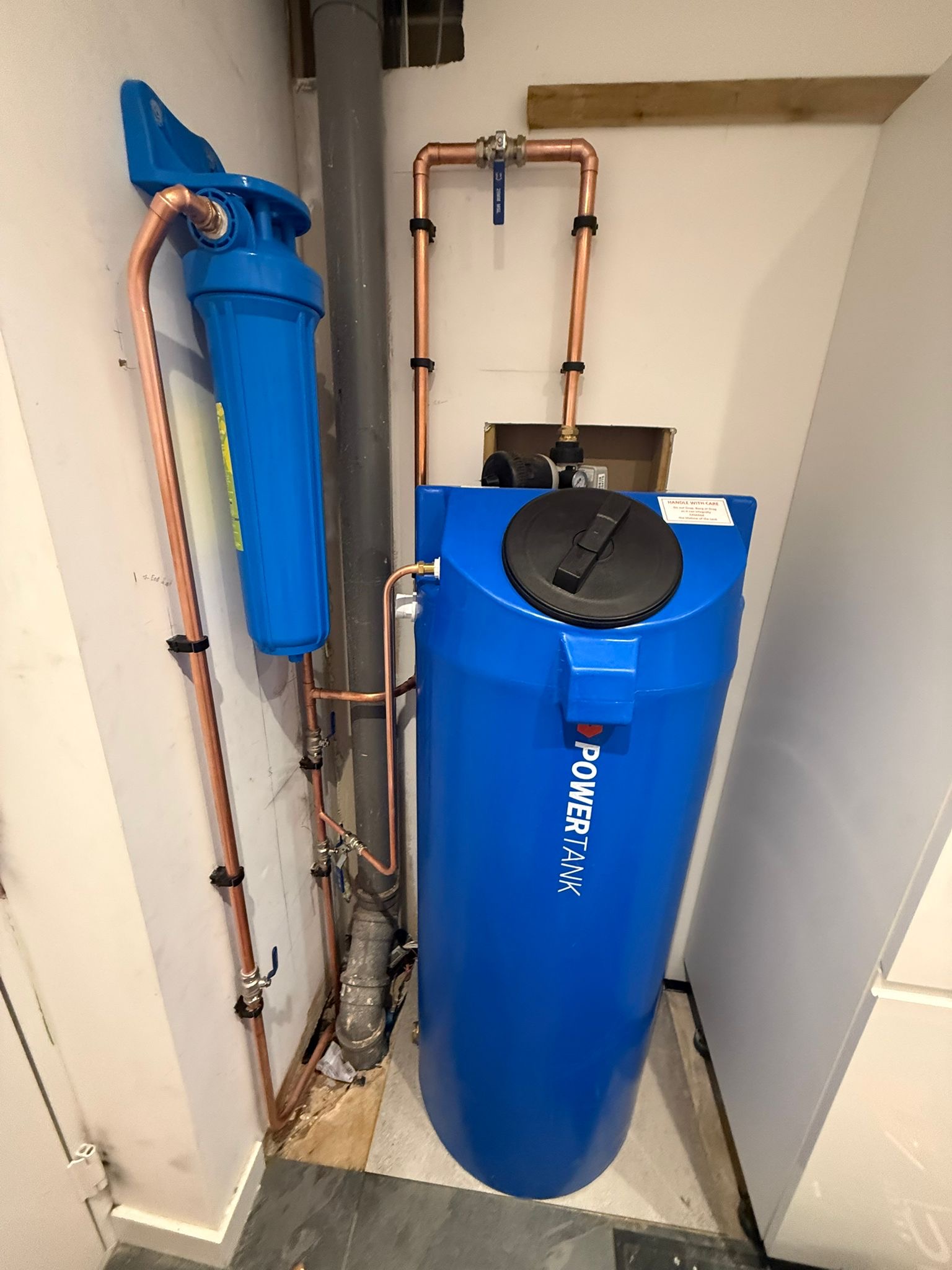
Some homes have stored cold water or a hot water cylinder, while others receive water through a different arrangement. Storage and the connected pipework affect which parts of the home share a water path. A change limited to particular outlets may therefore be relevant to storage rather than the incoming mains. Explain whether there are known tanks or a cylinder.
Do not climb into a loft, lift tank covers or enter enclosed spaces simply to identify contamination. Safe external photographs and installation paperwork can help describe the arrangement. Leave cylinder safety equipment intact and report any unusual discharge separately. A plumbing assessment should consider how the affected outlet is supplied before deciding whether storage, fittings or pipes need attention.
Do not confuse brown water with ordinary white cloudiness
Water containing tiny air bubbles can appear white or cloudy, which is a different observation from brown particles or rusty colour. A visual description should distinguish those appearances without claiming either is automatically safe. Also note whether the colour settles, whether visible particles are present and whether the change is intermittent. Do not taste or deliberately smell questionable water at close range.
A photograph in a clean clear container may document appearance if collecting a sample is safe, but it is not a laboratory assessment. Avoid drawing conclusions from a reused vessel with staining or detergent residue. Tell the plumber exactly what you saw rather than labelling every unusual appearance as limescale, rust or contamination before the route has been checked.
A filter is not a diagnosis or a safety assurance
Buying a device before understanding the problem can obscure useful symptoms without addressing their source. Different treatment products have different purposes, and none should be assumed to make unexplained discolouration safe simply because the outgoing water looks clearer. Any proposed treatment needs an appropriate basis, compatible installation and attention to its operating and maintenance requirements.
Our hard water guide addresses mineral deposits as a separate concern. Hardness is not the same question as unexplained brown water. The existing water treatment service can be discussed where relevant, but a recommendation should follow identification of the problem rather than a promise made from colour alone.
Keep supply pressure and colour observations separate
A change in flow alongside discolouration is worth mentioning, but the two symptoms do not establish one particular fault. Restrictions, supply changes and disturbed material can interact in different ways. Note whether one outlet is weak or the whole property has changed. Do not adjust unidentified valves or remove aerators to investigate potentially contaminated water without suitable advice.
Our home water pressure article explains how outlet patterns guide a supply assessment. Here, the colour and its timing remain the priority. Include unusual smells, visible debris or an interruption in the same report, while avoiding guesses that might distract from the actual route and condition of the water.
Ask for guidance with a clear outlet history
Prepare a record of affected cold and hot taps, the first date noticed, periods of disuse and recent works. Explain whether the appearance clears during normal use or returns after the outlet rests. Say how the property is supplied if known, but do not dismantle fittings to fill gaps in that information. A transparent account of uncertainty is useful too.
For advice about the property's internal plumbing, send Pro Plumbers the outlet pattern and photographs or call 01732 444555. Keep visibly discoloured water out of drinking and food preparation while appropriate guidance is sought. The next step should establish the cause and suitable response, not simply make the water look more familiar.