
Pro Plumbers · 29 October 2026
Immersion heater not working: what to check before calling for help
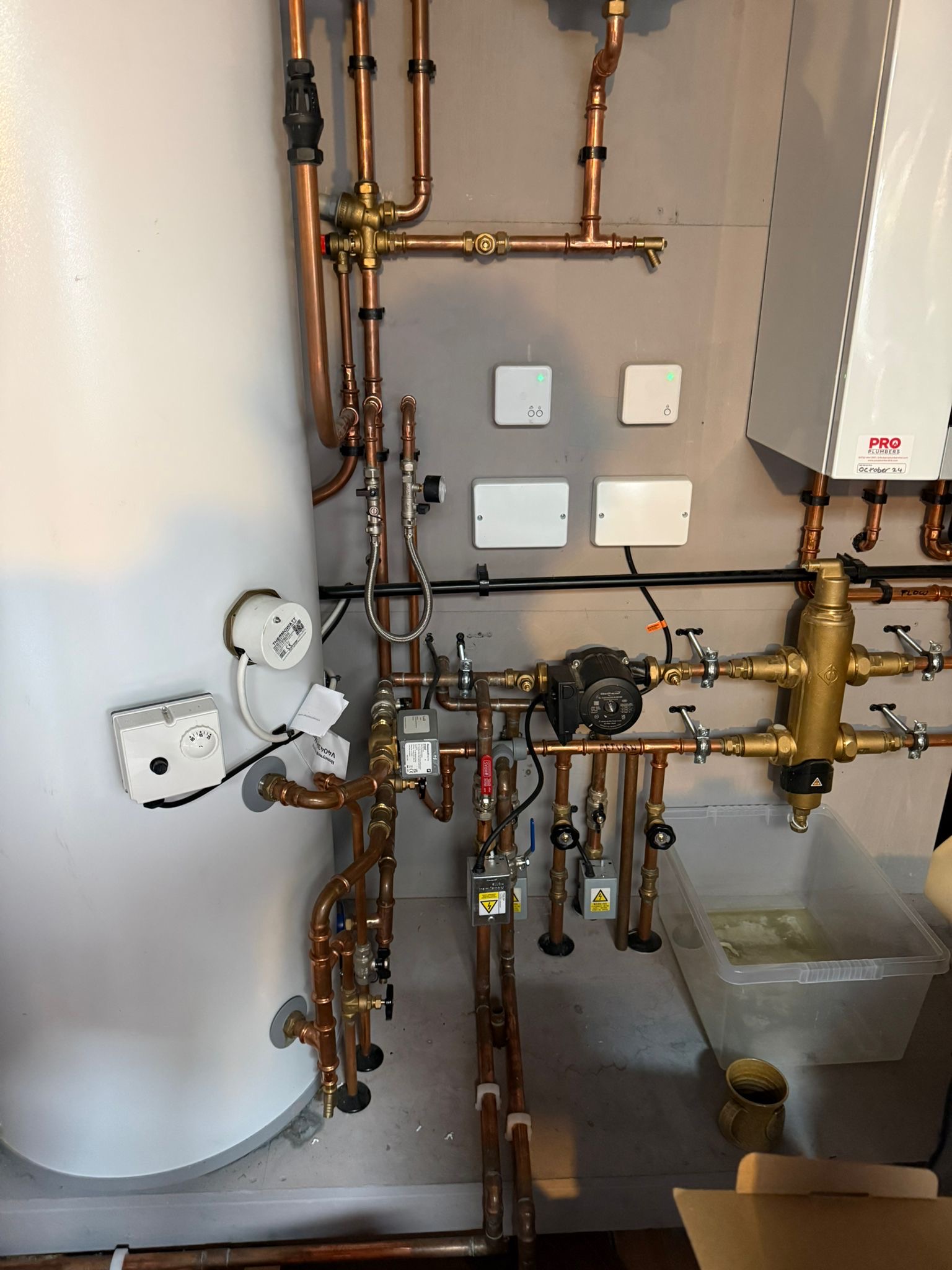
An immersion heater that leaves the cylinder cold may have lost its electrical supply, missed its timed heating period or developed a thermostat or element fault. Start with the controls you normally use, not the electrical cover. If the water is unusually hot, or you notice steam or hissing from the cylinder, switch the heater off at its external switch if safe and call for professional help. Keep clear of hot discharge water.
Establish which heat source should be warming the cylinder
Some cylinders use an immersion as their main heat source; others normally receive heat from a boiler and have an immersion as backup. Check the labels and the household instructions rather than assuming the boiler programmer also controls the immersion. If the boiler is meant to heat the stored water, our guide to a boiler not heating water covers that separate diagnostic route.
Note whether all hot taps are affected, when the water was last hot and whether the problem followed a power interruption. A single poorly performing outlet may indicate a local tap or blending issue rather than a failed immersion.
Check the immersion timer, boost and external supply switch
- Confirm that the labelled immersion switch is on and the timer clock shows the correct time, especially after a power cut.
- Review the heating schedule. An off-peak programme may not heat immediately during the day.
- If there is a boost function, follow its instructions and check that the boost period has actually been selected.
- Allow the normal heating time stated for your cylinder before judging the result. A large cold store will not become hot instantly.
An illuminated switch is useful information, but it does not prove the element is receiving power or heating water. Do not leave boost running repeatedly to compensate for unexplained poor performance.
Inspect the fused spur without opening electrical fittings
The immersion may be supplied through a fused connection unit, often called a fused spur. Look only at its external switch and any indicator. Scorch marks, a burning smell, buzzing or a damaged fitting mean stop using it and arrange a qualified electrician or engineer. Do not remove its faceplate, open the fuse carrier or fit a higher-rated fuse to keep it running.
At the consumer unit, a tripped RCD or MCB may explain the loss of supply. With dry hands and a dry, undamaged consumer unit, you may reset the identified device once if you are familiar with its instructions and there are no warning signs. If it trips again, stop and call a qualified electrician or engineer. Do not keep resetting it or bypass protection. If uncertain which device serves the heater, leave diagnosis to them.
Leave the thermostat cap and cutout to a qualified person
The immersion thermostat setting is commonly beneath an electrical cap. Do not remove that cover to inspect or adjust it. Switching off at a nearby switch does not establish that exposed terminals are safe. A qualified person must isolate the supply, prove it dead and check the thermostat against the cylinder manufacturer's requirements.
A safety cutout can interrupt heating if overheating occurs. Its reset button may also be beneath the cover. This is not a homeowner reset: a qualified person should investigate why it operated before considering a reset. Repeated cutout operation can indicate a thermostat or other fault that needs correction, not repeated button pressing.
Why one failed element can look like a timer problem
Dual-element cylinders often have a lower element for heating a larger volume and an upper element for a smaller boost supply. Arrangements vary, so check the labels. If boost produces some hot water but the normal overnight cycle does not, that pattern helps an engineer distinguish a failed lower element from a supply or scheduling fault. It is not proof on its own.
In hard-water areas, scale can collect around an element and contribute to noise, poor heat transfer or premature failure. Similar symptoms have other causes. Electrical testing and inspection, rather than guesswork, establish whether the element, thermostat or supply needs attention. Never loosen an immersion element or attempt descaling through its opening yourself.
Keep unvented cylinder safety devices out of DIY checks
For an unvented cylinder, anything beyond ordinary external user controls needs a G3-qualified engineer, with electrical work undertaken by an appropriately qualified person. Never touch or operate the temperature/pressure relief valve to investigate a fault. Report discharge, excessive heat or unusual cylinder noises promptly; do not block any discharge pipe.
For help identifying the fault, call 01732 444555 or use our quote form to describe your immersion heater problem. Our hot-water cylinder service covers cylinder concerns, while plumbing repairs can help with associated pipework problems.