
Pro Plumbers · 26 November 2026
What to expect when a water softener is installed
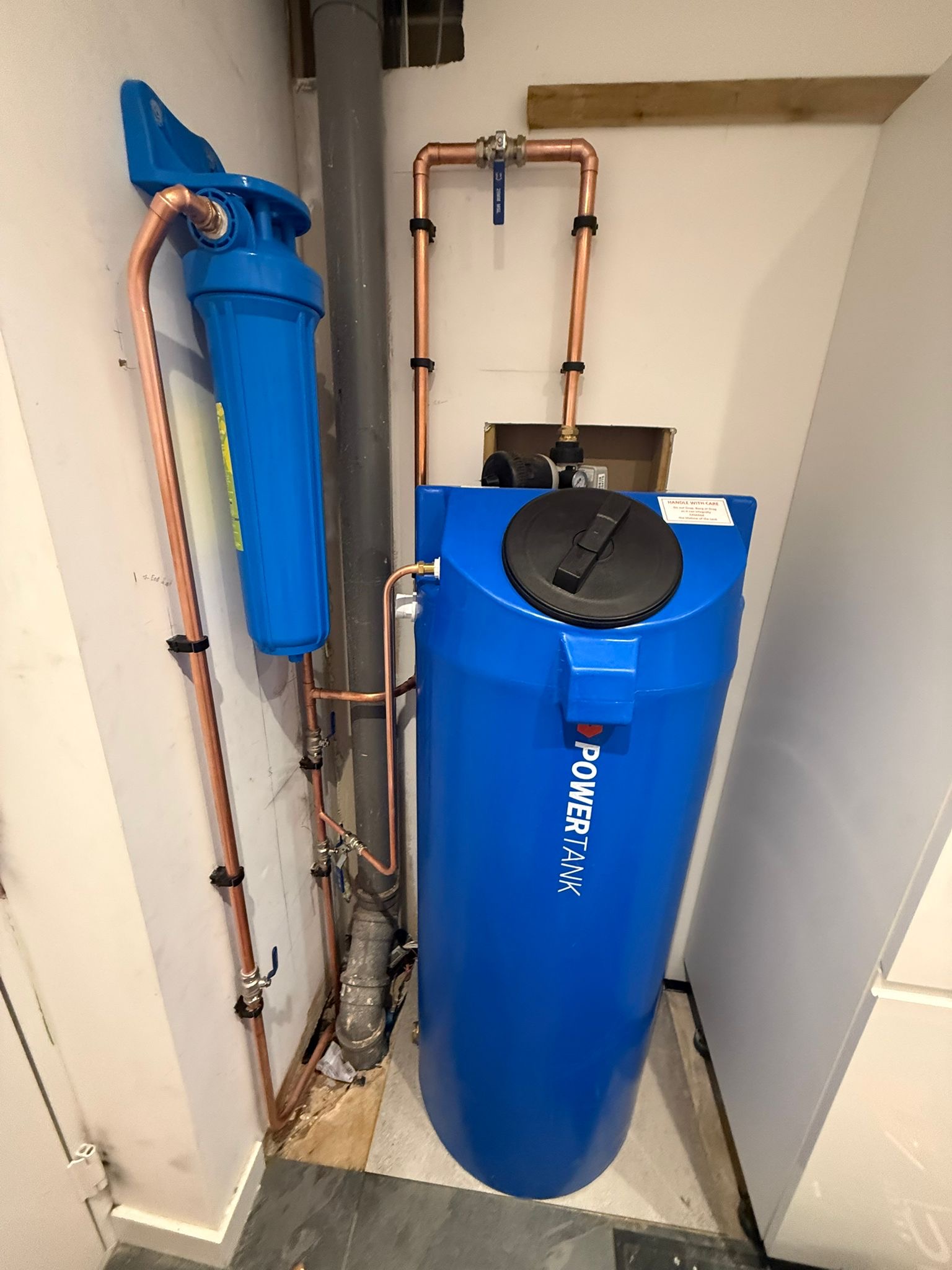
A water softener needs more than a spare patch of cupboard floor. The installer must identify the incoming supply, decide which outlets will be softened, arrange drainage and provide access for salt and servicing. The selected unit also has to suit your water conditions and household use.
Planning those details first helps avoid an appliance that technically fits but is awkward to maintain. This guide follows the installation from the initial assessment through commissioning and the routine you should expect afterwards.
Confirm that hardness is the issue to address
Scale on taps, shower fittings and heated appliances can indicate hard water, but the specification should still begin with appropriate water assessment. Other concerns such as taste, odour or discolouration do not automatically share the same solution. A softener addresses hardness rather than every possible water-quality objective.
Read our hard water and limescale guide to recognise the difference. If you also want a particular drinking-water treatment, discuss that separately so a filter is not expected to perform the softener's job or vice versa.
The incoming supply determines the layout
The installer needs to locate the main supply and understand how it branches through the property. Decisions include which cold outlets, hot water system and outside taps are included or excluded. This is why the final arrangement cannot be inferred from the position of the kitchen cupboard alone.
A known, accessible stopcock is useful, but old valves should not be forced during preparation. Our stopcock guide explains how to identify the main control safely before the visit. Leave any seized or leaking valve for professional attention.
Choose a practical permanent location
The unit needs enough space for its body, connections and owner maintenance. Salt must be carried to it, and the lid or access point must open without removing fixed shelves. Hoses and pipes should not be trapped behind an appliance that cannot be serviced.
Consider the route for salt storage as well as the dimensions of the unit. A narrow understairs space may appear suitable until access and drainage are examined. The location also needs to meet the manufacturer's environmental requirements rather than exposing the equipment to unsuitable temperatures or conditions.
Drainage and regeneration belong in the design
Many softeners regenerate using a process that discharges water through a drain connection. The route, air gap or other required arrangement must suit the product and applicable plumbing requirements. It is not acceptable to push a hose loosely into a convenient waste pipe.
Ask where the discharge goes and how it will be tested. Do not improvise an extension if the supplied arrangement does not reach. The installation should also include any power supply required by the selected model, arranged safely by the appropriate person.
Agree the drinking-water and outside outlets
Discuss which tap you prefer for drinking and cooking and how the manufacturer recommends arranging it. Depending on the design, a separate tap or bypass may be considered. Outside watering and other specific uses also deserve discussion before the pipework is connected.
Our softener and filter comparison explains why these choices are separate from drinking-water filtration. The installer should label or explain the finished arrangement so you know which outlets receive softened water.
Pressure and existing equipment need consideration
The softener becomes part of the water supply arrangement, so flow, pressure and connection sizes must suit the installation. Existing cylinders and appliances also matter. Work on an unvented hot water cylinder requires a G3-qualified installer, and unrelated settings should not be changed to accommodate a new unit.
If weak flow is already a concern, mention it before specification. Our low water pressure guide explains why testing should precede attempts to improve performance. A treatment device should not be purchased as a guessed cure for an unrelated restriction.
Commissioning includes explanation, not just water flow
Once connected, the unit and plumbing need the checks specified by the manufacturer. The installer should verify the arrangement, set up the equipment appropriately and explain regeneration, salt use, bypass operation and ordinary indicators. You should also know what to do if water appears where it should not.
Keep the instructions and installation details accessible. Ask which routine observations are expected and which need a service visit. Our softener overflow guide explains why an unexpected discharge or persistent water around the unit should not be ignored.
Plan the installation around real maintenance
Before work starts, clear the proposed cupboard and provide details of the main supply, drain options and household priorities. Ask what access, drainage, electrical provision and making good are included in the quotation. Confirm who supplies the unit and which consumables you will need to keep available.
On installation day, expect the water supply to be interrupted while connections are made. Agree when this will happen and which facilities will remain available. Remove items from the working area, but do not disconnect the old plumbing or pre-cut a route for the unit.
Afterwards, monitor the accessible connections during normal use and regeneration in line with the handover advice. Do not place salt bags against pipework or store them where spilled moisture can collect. Keep the bypass labels legible so another occupier can explain the arrangement if you are away.
Contact Pro Plumbers about water softener installation, or call 01732 444555. Our water filtration and treatment service covers assessment and specification, while general plumbing is relevant to the surrounding supply work. Choose the layout with future salt refilling and servicing in mind, not only installation day.