
Pro Plumbers · 24 November 2026
How to drain a central heating system, and when you should
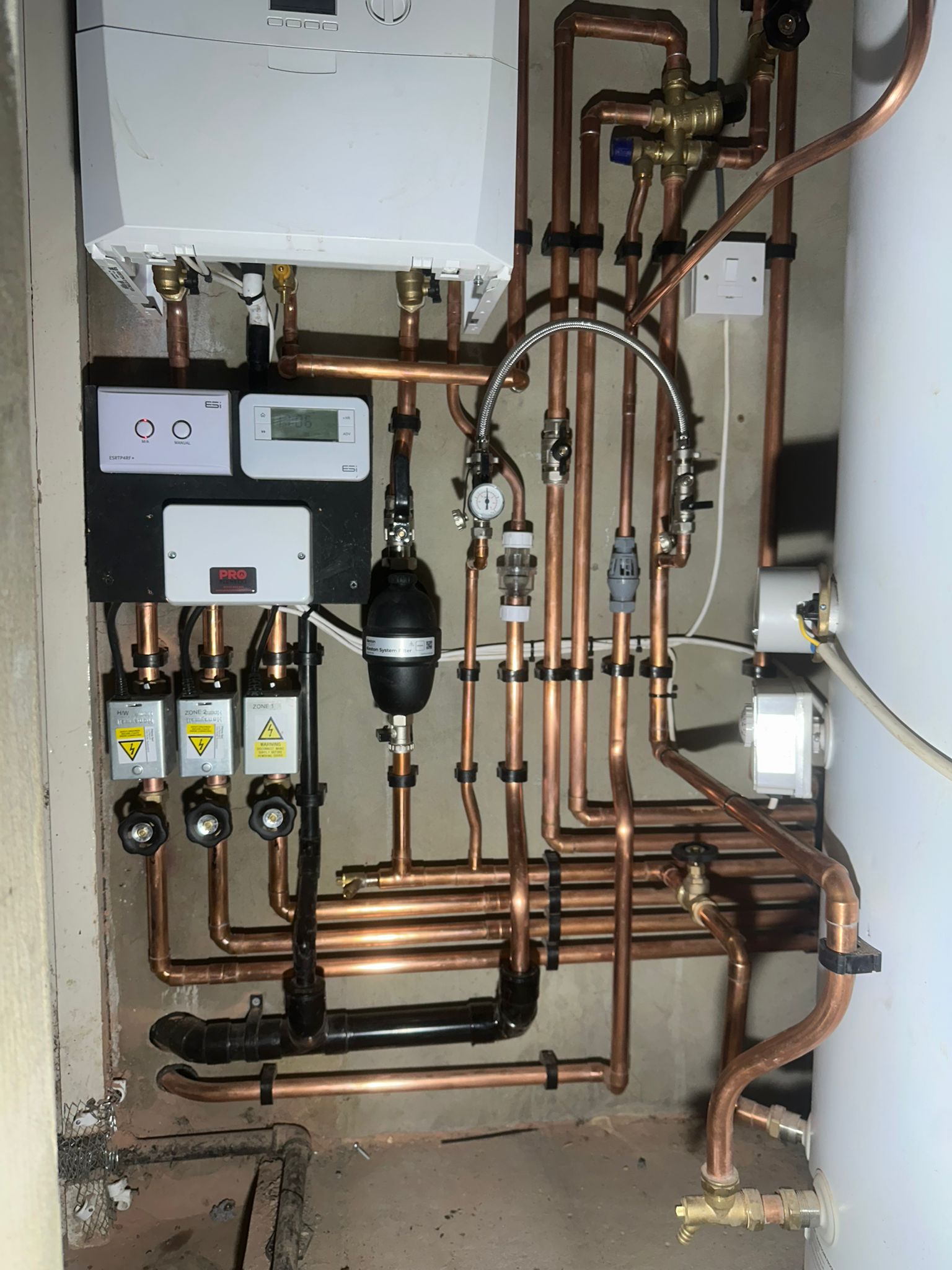
Draining a heating system means emptying the water out of the boiler circuit, pipes and radiators. It is not something you do every year. It usually comes up when a radiator needs taking off the wall, a valve is being changed, a leak needs repairing, or the water inside has become so dirty that it needs replacing along with a corrosion inhibitor.
This guide explains how draining works in broad terms, the difference between sealed and open-vented systems, the risks of getting it wrong, and the jobs where it makes sense to hand it to an engineer. It does not cover anything on the gas side of the boiler, which must only ever be touched by a Gas Safe registered engineer.
Reasons a system gets drained
The most common reason is work on the pipework or radiators: swapping a radiator for a larger one, fitting new valves or moving a pipe run during a kitchen or bathroom refit. Draining is also needed when the system water is heavily contaminated, so it can be refilled with clean water and fresh inhibitor.
Draining is not a fix for a single cold radiator, a noisy boiler or a lockout code. If one of those is your problem, the cause is usually elsewhere, and emptying the system just adds work.
Know which type of system you have
A sealed system has a pressure gauge on or near the boiler and no tanks in the loft for the heating. It is filled through a filling loop from the mains. Combi boilers and most system boilers work this way.
An open-vented system has a small feed and expansion tank in the loft that tops the heating water up automatically. If you drain an open-vented system without isolating that feed, water will keep running in while you are trying to empty it. Knowing which you have changes the order of the job.
The general sequence
The boiler is switched off and allowed to cool fully, and on an open-vented system the feed from the loft tank is isolated. A hose is attached to the drain-off valve, normally found at the lowest point of the system near a downstairs radiator or by the boiler, and run outside to a drain.
The drain-off is opened and the bleed valves on the upstairs radiators are opened to let air in, which helps the water flow out. Downstairs radiators are opened next. Emptying a whole house can take a while and the water is usually dark, so protecting floors matters.
Refilling is the reverse: close the drain-off and bleed valves, refill slowly, bleed each radiator from the bottom floor upwards, restore the pressure on a sealed system and add inhibitor.
Where it often goes wrong
Old drain-off valves can be stiff, and once opened they sometimes refuse to close properly. Hoses slip off and soak a room. Air left in the system after refilling causes cold radiators and noisy pipes. On sealed systems, refilling to the wrong pressure can make the boiler lock out or the relief valve discharge outside.
Forgetting to add inhibitor afterwards is another common slip. Fresh water without it lets corrosion start again inside steel radiators.
Partial draining for a single radiator
Taking off one radiator does not always mean emptying the whole house. With both valves on that radiator closed, the radiator itself can be drained into a tray and removed, leaving the rest of the system full. Our guide to radiator valves explains which valve is which. Even so, valves that do not seal fully are common in older homes, so have towels ready and know where the boiler isolation switch is.
Draining as part of a clean-up
If the water is black and sludgy, a simple drain and refill rarely removes much of the deposit, which tends to stay settled in the radiators. That is where a chemical clean or a power flush comes in. Read does my central heating need a power flush to see whether your symptoms point that way.
When to call an engineer
Call us rather than carrying on if the drain-off valve will not open or close, if water appears from the boiler casing, if you are unsure whether you have a sealed system, or if the boiler shows a fault after refilling. Anything inside the boiler, and anything involving gas, is engineer-only work.
We drain systems routinely when fitting radiators through our radiator installation and replacement service, when replacing whole systems with central heating installation, and during general heating engineer visits.
Protecting the house during the job
Draining moves a lot of dirty water through the house, so preparation saves damage. Clear the area around the drain-off point, lay old towels and dust sheets, and check the hose runs downhill all the way to an outside drain without kinks. Never run the hose to a garden bed, because system water contains inhibitor and corrosion debris.
Keep an eye on the hose connection the whole time. If the hose works loose, closing the drain-off quickly limits the mess. On sealed systems, note the pressure reading before you begin so you have a reference when refilling.
Questions to ask before you start
Do you know where the drain-off valve is, and does it look sound? Is the boiler a combi or a system boiler, and does the manual say anything about refilling? Do you have inhibitor ready? If the answer to any of these is no, it is usually quicker and safer to book the work than to discover the gaps halfway through with the system half empty.
Booking a visit
Phone our Sevenoaks office on 01732 444555 or send details through the contact page. Our minimum charge is £90 + VAT, including the first hour on site, and larger jobs receive a fixed, no-obligation price before work begins.