
Pro Plumbers · 29 October 2026
Does my central heating need a power flush? Signs and alternatives
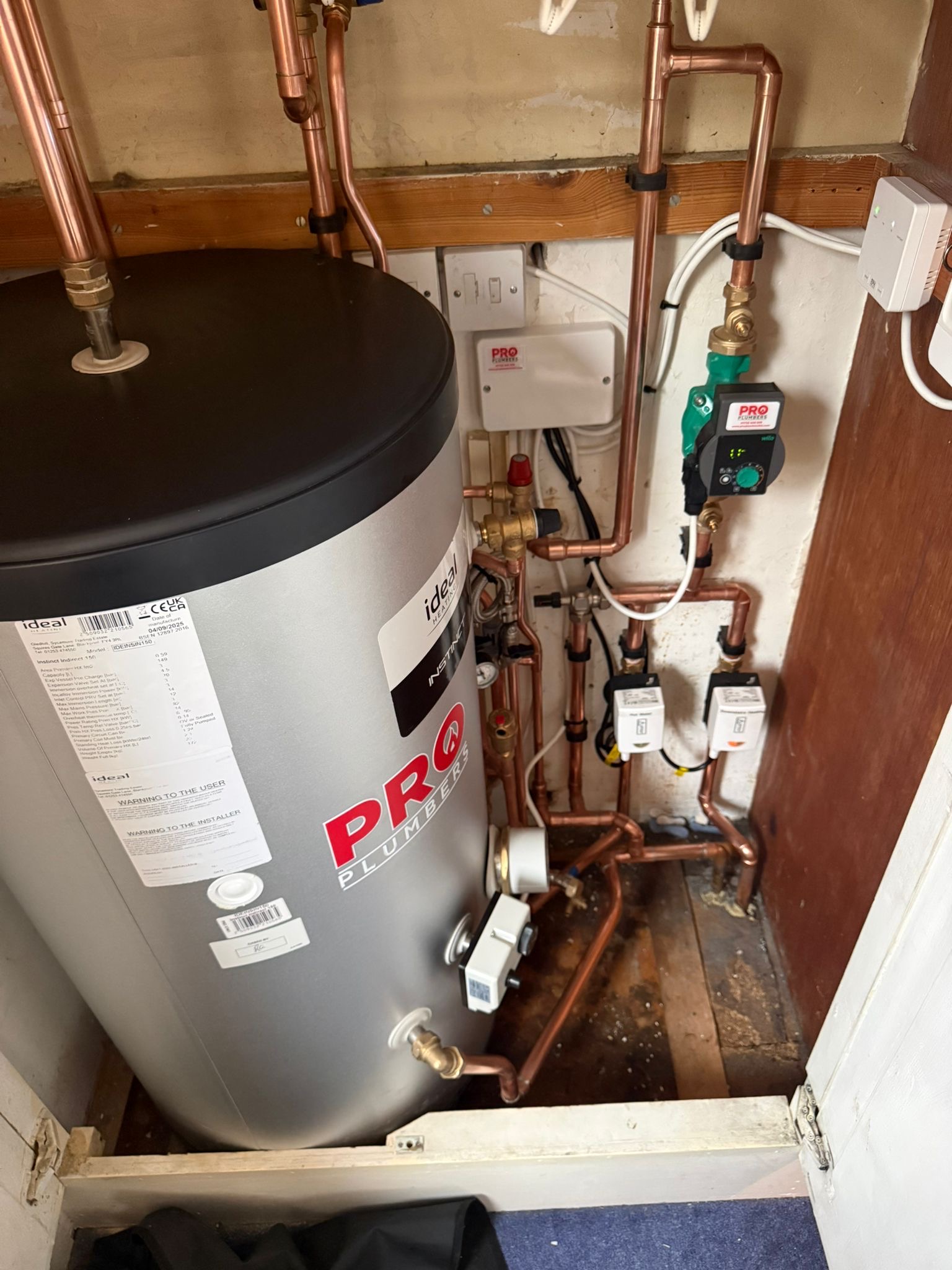
Your central heating may need a power flush if accumulated debris is restricting circulation, but symptoms alone are not enough to decide. An assessment should establish whether contamination is present, how widely it affects the circuit and whether the installation can tolerate the proposed cleaning method. Some problems need a valve adjustment or repair instead.
Build a picture of contamination rather than counting symptoms
Several persistent symptoms together give an engineer more useful information than one isolated observation. Record which rooms are affected, whether the problem developed gradually and whether recent alterations changed how the heating behaves. Possible clues include:
- Large cold areas at radiator bottoms after a reasonable warm-up period.
- Dark or dirty water noticed during otherwise necessary radiator bleeding.
- A boiler making unusual rumbling or kettling sounds.
- Radiators taking much longer than previously to heat their rooms.
- An older heating circuit being connected to a replacement boiler.
None of these automatically means a power flush is needed. Dark water is a clue, not a measurement of the quantity or location of debris. Do not bleed radiators repeatedly just to obtain samples. Poor controls, air, incorrect balancing and circulation faults can also explain slow heating.
For a closer look at one particular symptom, read why radiators develop cold bottoms. That guide separates local radiator checks from decisions about cleaning the complete circuit.
Separate boiler noises from evidence in the water
Kettling can be associated with restricted heat transfer, but its causes may include limescale or circulation problems that a general system clean will not resolve. Our explanation of boiler banging and kettling covers that distinction. A noisy boiler deserves diagnosis rather than an assumption that sludge is the cause.
Never remove the boiler casing or attempt internal cleaning yourself. Gas boiler internals require a Gas Safe registered engineer. Stop using an appliance that appears unsafe and seek professional advice. If gas or carbon monoxide is suspected, leave the property, open doors or windows only if safe, and call the National Gas Emergency Service on 0800 111 999 from outside. Do not use the appliance until a Gas Safe registered engineer has checked it.
Ask what the assessment establishes before authorising cleaning
A useful assessment considers water condition, radiator temperature patterns, circulation, existing filtration and the condition of accessible pipework and valves. Explain any leaks, recurring pressure loss or previous repairs. Cleaning should not be used to disguise a fault that needs repair first.
Before a new boiler is fitted to an old circuit, the installer should plan cleaning and water treatment to the appliance manufacturer's requirements. That does not mean every replacement boiler requires a power flush. The appropriate process depends on contamination, system design and the installation instructions.
Compare four approaches to removing heating debris
Power flushing: specialist equipment circulates cleaning fluid through the circuit, helping dislodge and remove deposits. It can be useful where contamination is distributed across several radiators or pipe runs, provided the system is suitable.
Chemical cleaning with drain-down: a compatible cleaner may circulate using the heating system's pump before the circuit is drained and rinsed. A gravity flush relies on filling and draining rather than a dedicated flushing machine. These approaches have limitations where stubborn restrictions prevent useful flow.
Individual radiator removal: a heavily affected panel can sometimes be removed and cleaned separately. This may suit a local problem, though it does not clean the remaining network.
Magnetic filtration: a filter collects magnetic particles carried past it. It supports ongoing water quality but is not a substitute for removing substantial settled deposits. An engineer may combine approaches rather than treating them as interchangeable options.
Understand the visit without treating it as a DIY procedure
For central heating power flushing, an engineer first checks suitability and protects the work area. Dedicated equipment is connected at an appropriate point, and compatible cleaning chemicals are circulated. Radiators may be worked through individually and flow direction changed where the equipment and system allow.
Dirty solution is removed and the circuit rinsed, with the results checked rather than judged by appearance alone. The system is then restored to its operating condition, treated appropriately and checked for circulation and leaks. The precise sequence varies with the installation. Do not connect hired equipment or add chemicals without understanding compatibility and the system's condition.
Recognise systems that need another plan
An older system is not automatically unsuitable, but fragile pipework, heavily corroded radiators and unreliable joints require caution. Cleaning may expose existing weaknesses previously obscured by deposits. Some configurations or components also limit the methods that can safely be used; follow equipment and appliance guidance.
If water condition is satisfactory and the fault is a sticking valve, trapped air or incorrect controls, power flushing is unlikely to address the cause. Where components are already failing, repair or replacement may need to come before any cleaning.
Agree the water-treatment plan after the flush
After cleaning, compatible inhibitor should be added at the correct concentration and checked as appropriate. An existing magnetic filter needs inspection and maintenance; a suitable new filter may help collect residual circulating particles. Neither measure removes the need to investigate recurrent leaks or repeated topping up.
To discuss whether cleaning is justified, call 01732 444555 or request a heating assessment through the quote form. Share the symptoms and any plans for boiler replacement so the next step addresses the actual problem.