
Pro Plumbers · 29 October 2026
Radiators warm at the top but cold at the bottom: causes and fixes
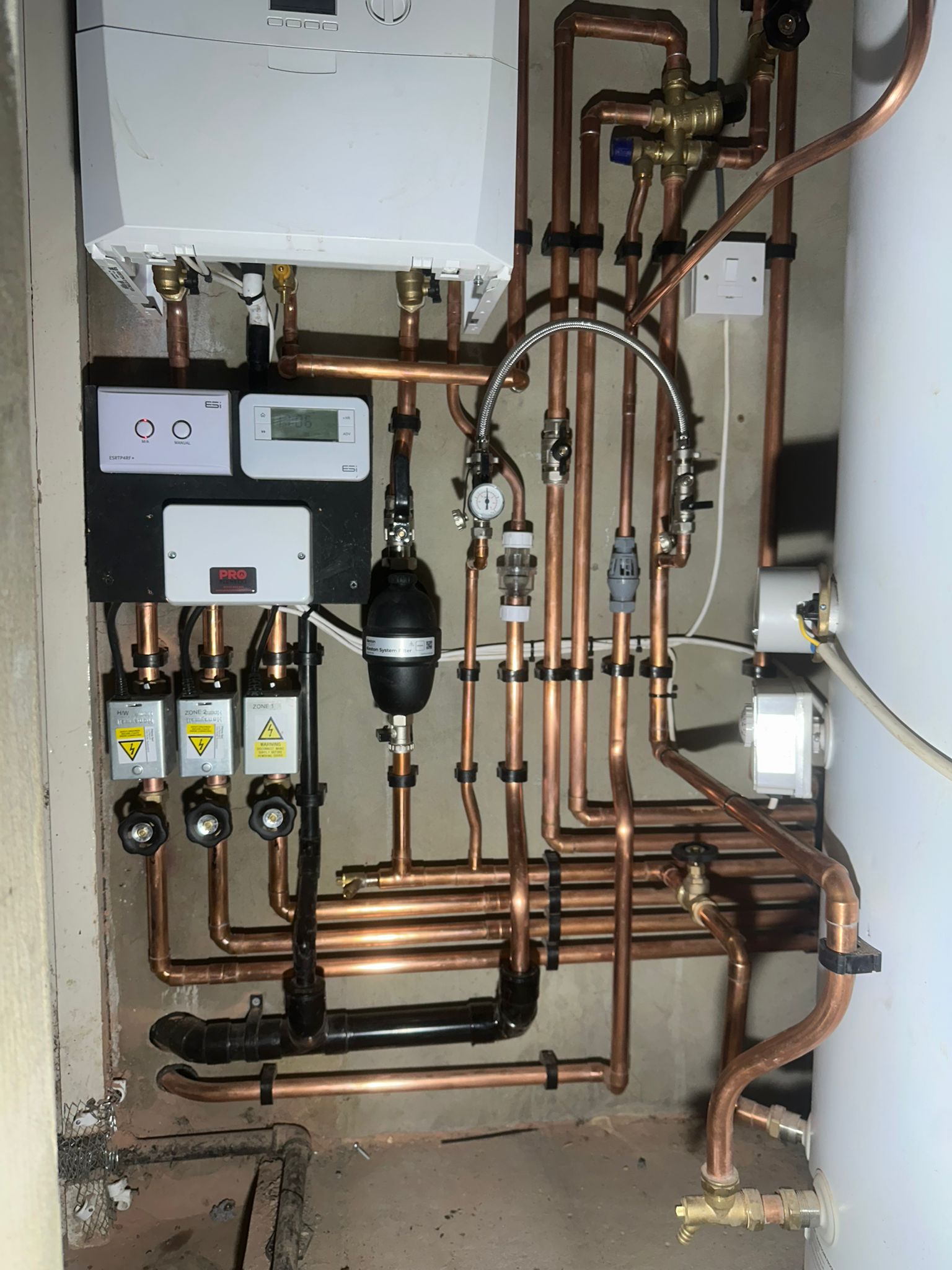
A radiator that stays warm across the top but cold over much of the bottom often contains settled sludge. Restricted water flow can produce a similar pattern, so the temperature difference alone does not prove that the whole heating system needs cleaning. Start by checking how the radiator behaves after the heating has had time to warm up.
Read the temperature pattern before choosing a remedy
A slightly cooler lower section can be normal: water gives up heat as it travels through the radiator. A broad, persistently cold patch with a noticeably hot upper section is more suspicious. Check several radiators under similar conditions, with their thermostatic valves turned up temporarily, and note whether the problem affects one room or much of the house.
Take care around hot surfaces and pipes. Do not run your hand along very hot metal to map the temperature. If a radiator is cold everywhere rather than only at its base, our checks for a radiator that is not heating up cover that wider fault pattern.
Why corrosion debris collects along the lower channels
Sludge is the most common explanation for a pronounced cold bottom. Corrosion within a heating circuit produces debris, including black iron oxide called magnetite. This material can circulate with the water and settle in slower-moving areas, particularly the lower waterways of radiators. Deposits restrict circulation and heat transfer, leaving part of the panel underheated.
It is not possible to judge the amount of contamination from the outside. A heating engineer can compare temperature patterns, inspect accessible filter contents and assess water condition alongside circulation. A single affected radiator may need local attention; several affected panels make a system-wide investigation more useful.
Check accessible controls without disturbing pipework
Low flow can also leave the bottom relatively cool. A partly closed valve, poor distribution between radiators or a wider circulation fault may be responsible. Make these simple observations before arranging work:
- Check that heating is actually being requested by the programmer and room thermostat.
- Turn the normal thermostatic radiator valve control up and allow time for a response.
- Look for visible leaks around valves without loosening fittings or removing parts.
- Note whether nearby radiators heat quickly while more distant ones struggle.
Do not force a stiff valve, pull a valve pin with pliers or undo a connection. A lockshield valve controls distribution and may intentionally be partly closed; opening every lockshield fully can worsen the balance. Our guide to balancing radiators for even heat explains that separate adjustment process. Balancing redistributes flow; it does not remove settled solids.
Why releasing air will not clear a cold radiator base
Air tends to collect at the top, so trapped air usually leaves an upper section cold while water heats the lower section. Bleeding releases that air through the vent. It does not draw sludge out of the lower channels, and repeated bleeding of a radiator that already releases water is not a cleaning method.
If there is also a cold top or gurgling, bleeding may be appropriate. Switch the heating off, let it cool and follow the radiator and heating manufacturer's instructions, protecting surrounding surfaces. Close the vent gently once air has escaped and water appears. On a sealed system, check the pressure afterwards; only refill where the manufacturer's instructions permit and you understand the procedure. Stop if the vent leaks or pressure repeatedly falls.
Choose between local cleaning and wider circulation work
When only one radiator is obstructed, an engineer may isolate, remove and flush that radiator separately. This targets its deposits without assuming every part of the circuit needs treatment. Removal involves dirty water, heavy metalwork and potentially unreliable old valves, so it is not the same as a simple homeowner bleeding task.
If contamination is widespread, professional power flushing may be considered after assessing the system. Equipment circulates cleaning solution through the heating circuit to loosen and carry away deposits. Not every installation is suitable, and cleaning cannot repair corroded metal or a faulty pump. Targeted radiator repair may be more appropriate where a valve or the radiator itself has failed.
Keep cleaned water cleaner with filtration and inhibitor
A magnetic filter captures circulating magnetic debris such as magnetite as water passes through it. It cannot pull every settled deposit out of a radiator, and it will not capture every type of contamination. Its collection chamber needs servicing according to its instructions; leave this to an engineer if you are unfamiliar with the isolation and pressure arrangements.
A compatible corrosion inhibitor helps limit further corrosion when correctly dosed. It does not dissolve an established blockage. After draining or cleaning, an engineer should restore suitable treatment and check operation. Frequent topping up deserves investigation because fresh water introduces oxygen and dilutes inhibitor.
For a persistent cold lower section, call 01732 444555 or send your radiator symptoms through our quote form. Explain which rooms are affected so the assessment can focus on local restrictions or wider contamination.