
Pro Plumbers · 24 November 2026
What a magnetic system filter does for your heating
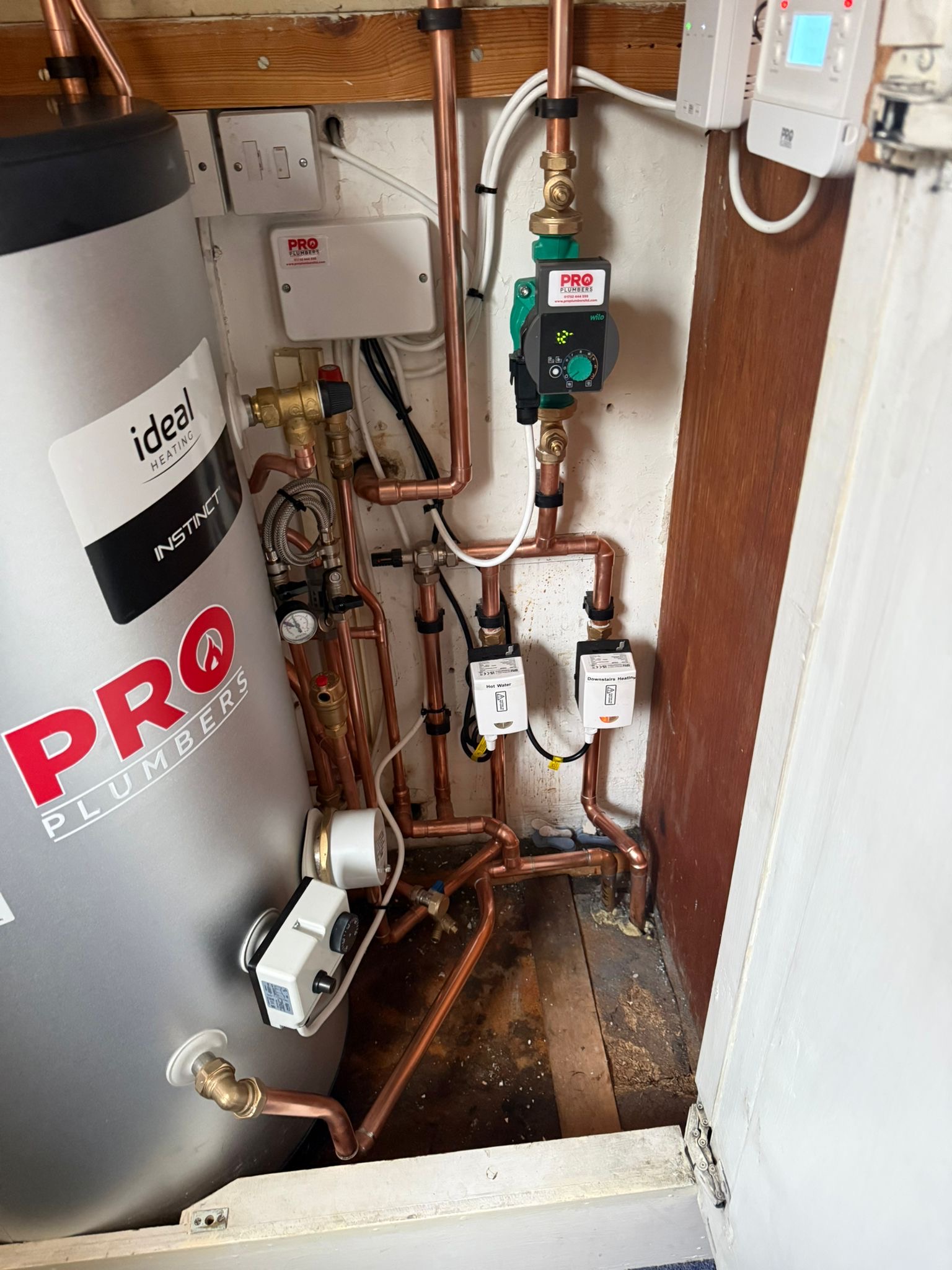
If you have had a new boiler fitted in the last few years, there is a good chance a cylindrical canister sits on the pipe underneath it. That is a magnetic system filter. It looks like a minor extra, but it does a steady job in the background of protecting the boiler from the debris that builds up inside every wet heating system.
This article explains where that debris comes from, how the filter catches it, why manufacturers care, and what cleaning involves. It also covers what a filter cannot do, so expectations stay realistic.
Where heating sludge comes from
Most radiators are pressed steel, and much older pipework includes steel and iron parts too. Water, small amounts of oxygen and metal react slowly over the years, producing black iron oxide, often called magnetite. It shows up as dark water when you bleed a radiator and as a thick black paste in the bottom of panels.
That paste is the reason radiators go cold at the bottom, pumps wear and the narrow passages in a modern boiler heat exchanger can clog. Our article on radiators cold at the bottom shows how it looks in practice.
How a magnetic filter works
The filter is fitted on the return pipe, which carries water back from the radiators to the boiler. Inside the housing sits a strong magnet, usually in a sleeve. As water passes through, iron particles are drawn to the magnet and held there instead of reaching the boiler. Many designs also slow the flow or spin it so non-magnetic grit drops out in the body of the filter.
Because it sits right before the boiler, it intercepts debris on every pass the water makes around the circuit.
Why boiler makers recommend them
Modern high-efficiency boilers have fine heat exchangers that do not tolerate sludge well. Industry guidance for new installations expects the system to be cleaned and protected, and many manufacturers link their extended warranty terms to the system being cleaned, dosed with inhibitor and fitted with a filter. The exact terms vary by brand and model, so check the paperwork that came with your boiler.
When we carry out a boiler installation, we discuss system protection as part of the job.
Cleaning the filter
A filter only helps if it is emptied. During a service the engineer isolates the filter with its built-in valves, removes the magnet, and flushes the collected sludge out of the housing. The amount that comes out is a useful health check for the system. A lot of debris suggests corrosion is active and the inhibitor may need topping up.
Cleaning is normally done once a year along with the boiler. Our guide to what a boiler service includes explains the wider visit, and you can book through boiler servicing.
What a filter will not fix
A filter catches debris that is moving. It does not dissolve the sludge already packed into the bottom of radiators, and it cannot reverse damage already done to a pump or heat exchanger. If an older system is badly contaminated, cleaning comes first, often with a chemical clean or a power flush, and the filter then keeps it cleaner from that point.
It also does nothing about limescale on the hot water side of a combi, which is a separate issue in hard water areas.
Should you add one to an existing boiler?
If your boiler is working well and has no filter, adding one can still be worthwhile, particularly if the water you bleed out is dark. It is a plumbing job on the heating pipework and needs the system partly drained and refilled. Space under the boiler matters too, since the filter has to fit on a straight run of return pipe with room to remove the cap.
Our article asking whether your system needs a power flush helps you judge how dirty it is before deciding.
Can I clean it myself?
Some householders do, following the manufacturer's leaflet, but the job involves isolating valves, releasing pressure and refilling a sealed system afterwards. Overtightened caps crack and O-rings get pinched. If you are unsure, leave it for the annual service rather than risk a leak under the boiler.
Inhibitor and the filter work together
A corrosion inhibitor is a liquid added to the heating water that slows the chemical reaction producing sludge in the first place. The filter then catches whatever debris still forms. Neither replaces the other. Inhibitor levels drop over time and after any draining or leaks, so they are normally checked during servicing and topped up when low.
If a system has had repeated top-ups because of a leak, fresh mains water has been coming in each time, bringing new oxygen and diluting the inhibitor. That is one reason a slow leak should be fixed rather than tolerated.
Signs the filter is doing its job
A filter that comes out heavily coated in black paste at its first clean shows how much debris was circulating. Over the following years, the amount usually falls if the system is clean and dosed correctly. Engineers often mention what they found, so ask at your service. A sudden increase can be an early warning that something has changed, such as a small leak drawing in fresh water.
Ask us about your system
Call 01732 444555 or use our contact page and we can check the filter, the water condition and the boiler together. Our minimum charge is £90 + VAT, including the first hour on site.