
Pro Plumbers · 6 November 2026
Unvented hot water cylinders and G3 explained
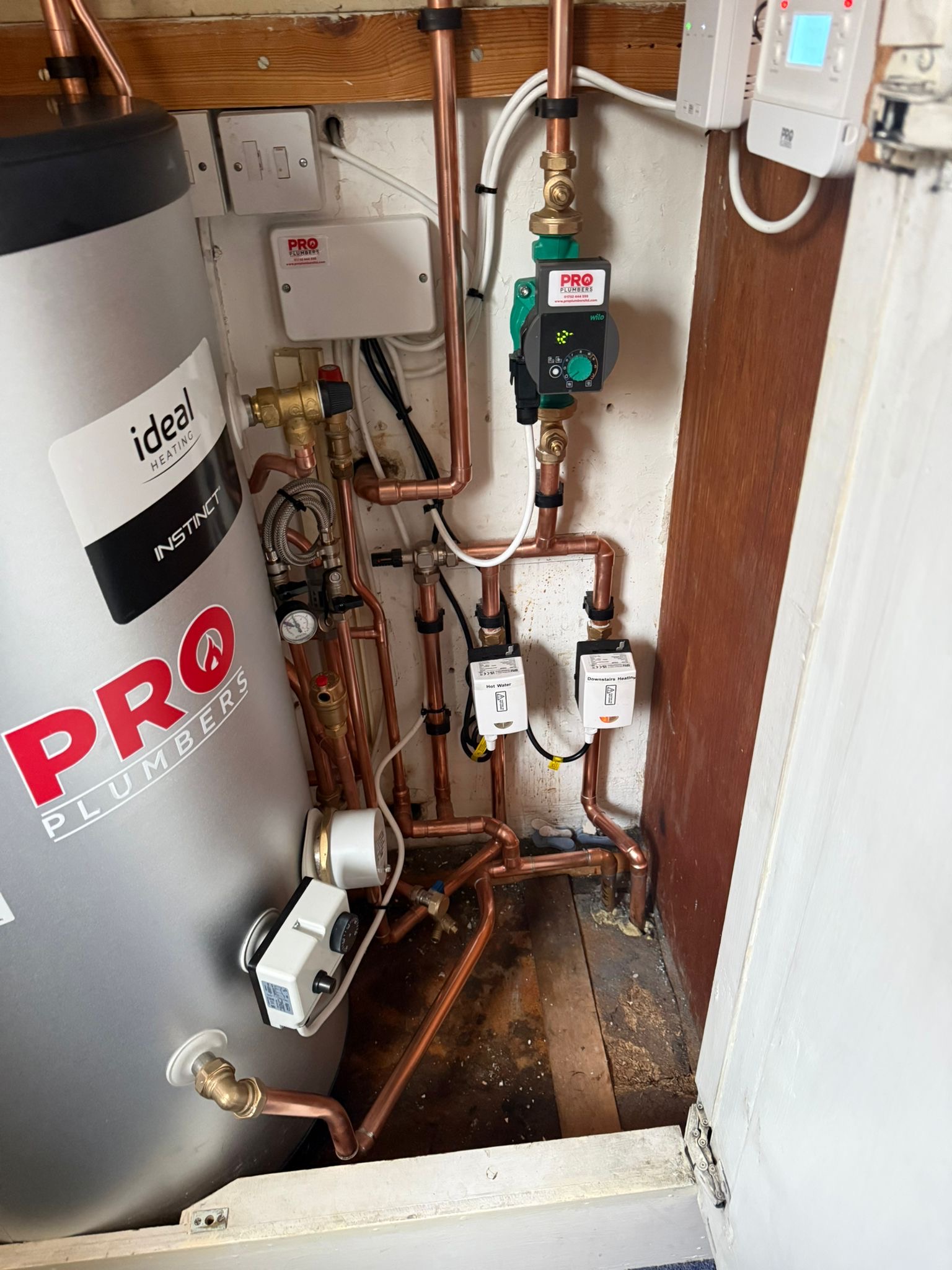
Open an airing cupboard in a newer home and you may find a sleek cylinder with pipes, valves and a small tank attached, but no cold water tank in the loft above. That is usually an unvented cylinder. It stores hot water at mains pressure, which gives strong showers and taps throughout the house. Because it works under pressure, it also comes with safety devices and rules about who can fit and work on it.
What makes a cylinder unvented
A traditional vented cylinder is fed by a cold water tank in the loft. Gravity pushes water down into the cylinder, and an open vent pipe allows expansion and lets the system breathe. The pressure at your taps depends on how high the loft tank sits above them, which is why upstairs showers on vented systems can be weak.
An unvented cylinder is connected directly to the incoming mains. There is no loft tank and no open vent. Hot water reaches the taps at close to mains pressure, so showers and baths on different floors can perform well, provided the mains supply is good. The cylinder may be heated by a system boiler, an immersion heater or both.
Why the G3 qualification matters
Storing hot water under pressure carries risks if anything goes wrong, so unvented hot water storage is covered by building regulations. Installers need the G3 qualification to fit unvented systems, and the work must be notified properly. Engineers who maintain and repair them should also hold G3, because the safety devices need to be understood and checked correctly.
Pro Plumbers is G3 unvented qualified. Our hot water cylinders page covers installation and repair, and our heating engineer page explains which qualification applies to which part of a heating system.
The safety devices, in plain words
Every unvented cylinder has several layers of protection. Designs vary between manufacturers, but you will usually find:
- Expansion vessel or internal air space. Water expands when it is heated. Because there is no open vent, this extra volume needs somewhere to go. Many cylinders have a small external expansion vessel; some have an air space inside the cylinder instead.
- Pressure relief valve. If pressure rises too far, this valve opens to let water out.
- Temperature and pressure relief valve. If the water gets far too hot, this valve opens as a last line of defence.
- Thermostats and thermal cut-outs. These control the heating of the water and shut it off if temperatures rise beyond safe limits.
- Tundish and discharge pipe. Water released by the relief valves passes through a tundish, a small open funnel where you can see it, and then through a discharge pipe to a safe place outside.
These devices are not for adjusting yourself. Never tamper with a safety valve, block a discharge pipe or try to reset a cut-out repeatedly. If one has operated, there is a reason.
When an unvented cylinder suits a home, and when it may not
Mains-pressure stored hot water often suits homes with:
- two or more bathrooms used at the same time,
- a wish to free up loft space by removing tanks,
- a good mains water supply in both pressure and flow.
It may be less suitable where the mains supply is weak, because the cylinder can only deliver what the mains provides. Space for the cylinder and a safe discharge route outside also matter. If you are weighing up a whole new hot water arrangement, our guide to combi, system or regular boilers explains how cylinders fit into the bigger choice, and our boiler installation page covers new systems.
Looking after one
Most manufacturers specify regular servicing of unvented cylinders, often yearly, to check the safety devices, expansion vessel and controls. Follow the instructions that came with your cylinder, and keep any service paperwork. A cylinder that is ignored can still work for a long time, but faults with expansion or valves tend to show up eventually.
Signs something needs attention
- Water running from the discharge pipe outside, or visible in the tundish.
- No hot water, or water that is only lukewarm.
- Banging, hissing or unusual noises from the cylinder.
- Pressure problems at the taps, such as surging or a sudden drop.
- Water around the base of the cylinder or its fittings.
If you notice any of these, call a G3 qualified engineer. Do not try to fix it by adjusting valves. If the cylinder has an immersion heater and that is the part that has stopped, our guide to an immersion heater not working covers the safe checks.
If the mains water is turned off
Because an unvented cylinder relies on the mains, a water company shut-off or a closed stopcock stops the supply to it. Hot water already stored may still run for a while, but it will not refill. If you turn the stopcock off for a repair elsewhere, switch off the cylinder's heating as the manufacturer advises, and turn it back on only once the supply is restored.
Thinking of fitting one?
Changing from a vented system to an unvented cylinder involves the cylinder itself, new pipework, a discharge route and sometimes a different boiler. The scope changes the price, as our guide to what affects the cost of a new boiler explains. To ask about a new cylinder or a problem with your current one, call 01732 444555 or request a quote.