
Pro Plumbers · 6 November 2026
Frozen pipes: how to thaw them safely and stop it happening again
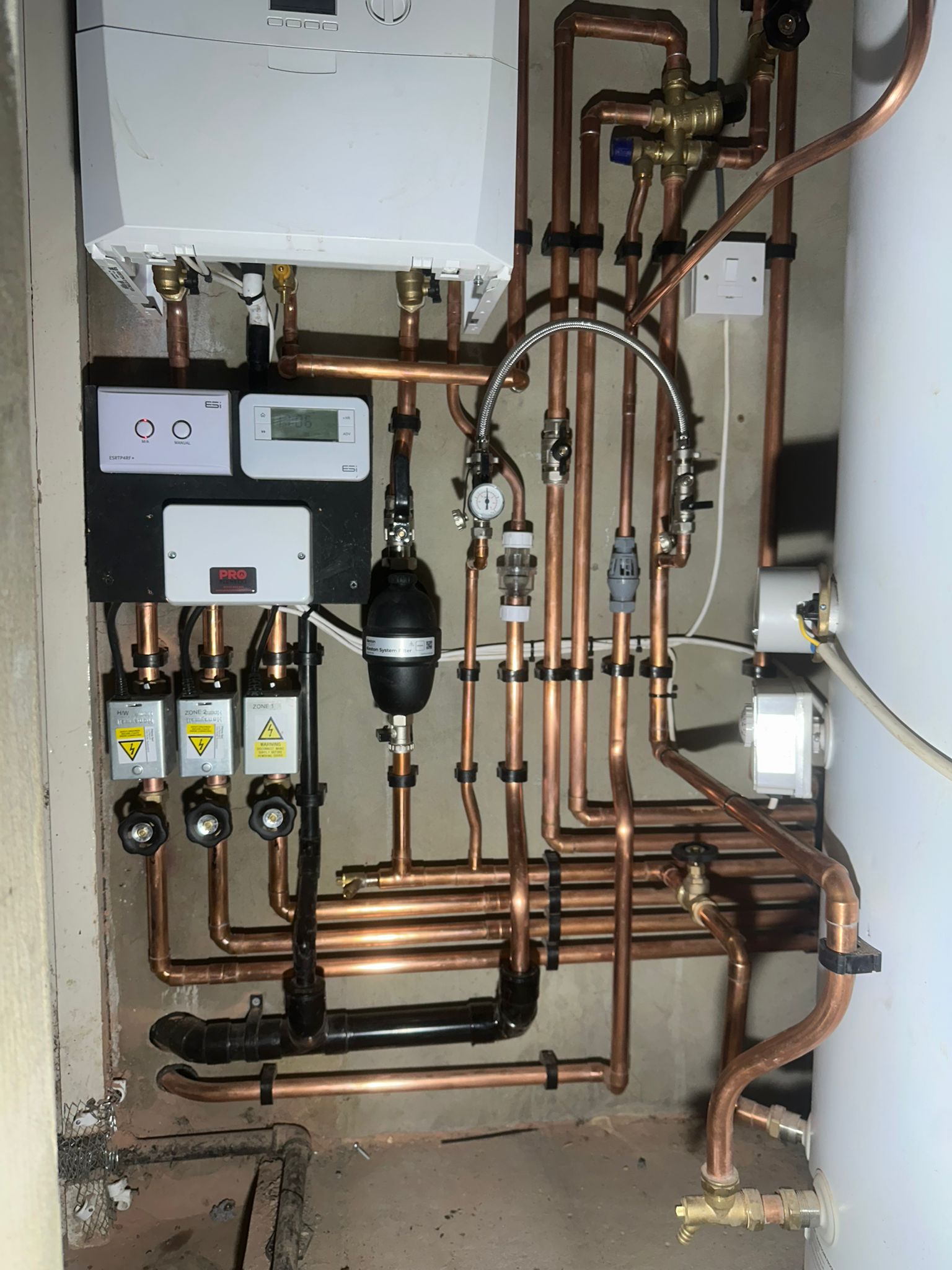
When the temperature drops hard in Kent, the pipes most at risk are the ones you rarely think about: the run through the loft, the feed to an outside tap, the pipework in a garage or garden room. Water expands as it freezes, which can stop the supply altogether and, worse, split a pipe that then leaks once it thaws. This guide follows a freeze in three stages: what to do before the cold arrives, how to spot a frozen pipe, and how to thaw one without causing damage.
Stage one: before the cold
A little preparation in autumn saves a lot of trouble in a frosty week.
Lag exposed pipes
Pipes in unheated spaces, such as lofts, garages, outbuildings and under suspended floors, are the first to freeze. Foam pipe insulation from a DIY store slips over most domestic pipes. Pay attention to bends and joints, where gaps are easy to leave, and to any pipe running close to an outside wall or air vent. If you have a cold water tank in the loft, check its pipework is covered too.
Find your stopcock now
You do not want to be searching for the main stop tap with water coming through a ceiling. Find it, check it turns, and make sure everyone in the house knows where it is. It is often under the kitchen sink, but not always. Our guide to finding and using your stopcock lists the usual places. If it is stiff or will not close, it is worth having it looked at; the stopcock and isolation valve repairs we carry out are listed on our general plumbing page.
Deal with outside taps
Many outside taps have an isolation valve on the pipe indoors. Close it before winter, then open the outside tap to let the water in that short section drain out. Leave the outside tap open until spring. If there is no indoor valve, consider having one fitted.
Keep some warmth if you are away
If you are going away in cold weather, leave the heating set to come on at a low setting rather than switching it off completely. Your thermostat or programmer manual will explain any frost setting it has. Opening the loft hatch slightly during a cold spell lets a little warmth reach pipes up there.
Stage two: when you suspect a freeze
A frozen pipe usually announces itself on a cold morning:
- A tap gives no water at all, or only a trickle, while others in the house are fine.
- A toilet cistern does not refill after flushing.
- You can see frost or ice on an exposed pipe, or it feels much colder than the pipes around it.
- The boiler has stopped and shows a fault. On a condensing boiler, this is often a frozen condensate pipe rather than a water supply pipe. Our guide to a frozen condensate pipe covers that separately.
If every tap in the house is affected, the problem may be the incoming supply rather than your own pipes. Our post on low water pressure in the home helps you tell the difference.
Stage three: thawing safely
Go slowly. The aim is to warm the pipe gently so the ice melts without stress on the pipe or joints.
- Turn off the water at the stopcock. If the pipe has split under the ice, this stops a flood once it thaws.
- Open the tap nearest the frozen section. This gives melting water and any trapped pressure somewhere to go.
- Apply gentle warmth. Start at the end nearest the open tap and work back along the pipe. Use a hot water bottle, towels soaked in warm water, or a hairdryer on a low setting held well away from any water.
- Never use a naked flame, a blowtorch or boiling water. These can damage pipes and joints, start a fire in a loft or melt plastic fittings.
- Check for splits and drips as it thaws. Look along the whole length, especially at joints. When you are happy, turn the stopcock back on slowly and watch again.
If you cannot reach the frozen section safely, for example behind a wall or under a floor, leave it and call.
If a pipe has split
A split pipe can look fine while frozen, then leak heavily as it thaws. If you find one:
- Keep the stopcock off.
- Mind electrics. If water is near sockets, lights or the consumer unit, keep clear and do not touch anything electrical while wet.
- Open cold taps to drain the system and catch what you can.
Our step-by-step guide on what to do when a pipe bursts goes into more detail. Then call us. Frozen pipe repairs are listed on our general plumbing page, and urgent leaks are handled through emergency plumbing or plumbing repairs. If the same run keeps freezing, or the pipework is old and corroded, rerouting or renewing it through pipework replacement may be worth discussing. Water spreading towards the boiler is covered in our guide to a boiler leaking water.
Talk to us
For help with a frozen or split pipe, call our Sevenoaks team on 01732 444555, Monday to Friday 7am to 10pm and Saturday to Sunday 9am to 8pm, or use our contact page. Our minimum charge is £90 + VAT, including the first hour on site, and larger jobs get a fixed, no-obligation price.