
Pro Plumbers · 27 November 2026
Why does my hot water run out so quickly?
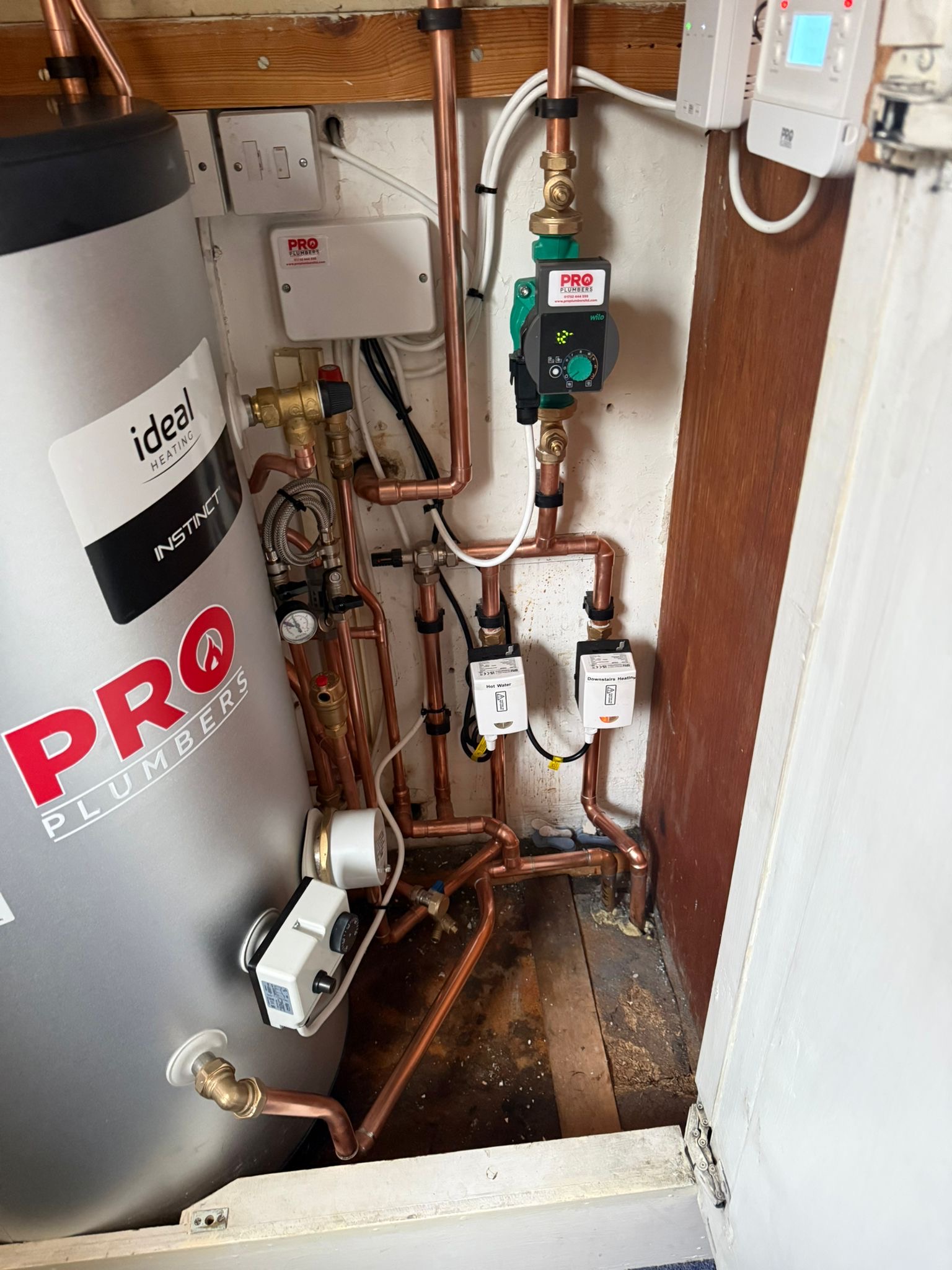
A shower that turns lukewarm before you have finished does not always mean the hot water system is too small. The explanation could be a changed heating schedule, incomplete reheating, an unexpected draw elsewhere or a mixing fault. Identifying the type of system helps separate a limited supply of stored hot water from a problem producing hot water on demand.
Avoid turning controls progressively hotter to stretch the supply. That can introduce a scalding risk without restoring useful capacity. Begin with ordinary observations and leave appliance testing, cylinder controls and internal components to the appropriately qualified professional.
Establish whether hot water is stored or made on demand
A cylinder stores heated water for later use. After a substantial draw, it needs time and a working heat source to recover. A combi boiler normally heats water as it passes through, so a sudden loss of warmth is not usually an emptied cylinder. Some installations have less obvious storage or more than one heat source.
Check accessible documentation rather than assuming the boiler appearance tells the whole story. The guide to combi, system and regular boilers explains the broad differences. Record whether there is a separate cylinder and which normal controls are used, without opening covers or tracing pipes through inaccessible spaces.
Compare recent demand with the normal household pattern
Longer showers, a different shower head, overlapping bathroom use or a bath being filled can use stored hot water sooner than expected. A change does not have to involve extra occupants. A fitting with a different flow can alter how quickly the available hot water is mixed and drawn from storage.
Look for a pattern over normal use rather than deliberately running the cylinder cold. Note which outlets are operating together and whether the problem appeared after a bathroom change. This gives an engineer context without proving that capacity is inadequate. A system that previously coped with the same demand may have a fault rather than needing a larger cylinder.
Check the displayed schedule before assuming a component failed
Stored water may not be fully reheated before the busiest period if the hot water programme has been shortened, disabled or shifted. A clock reset, holiday setting or accidental mode change can leave only part of the expected heating window. Heating and hot water may have separate schedules even when they share the same boiler.
Review only normal user controls and the manufacturer's instructions. Note the displayed times and whether a normal hot water demand is shown. Do not open the programmer, thermostat or wiring enclosure. If the screen appears correct but reheating does not happen, record that discrepancy for the engineer rather than repeatedly changing several settings and losing the original pattern.
Incomplete reheating can feel like reduced storage capacity
A cylinder can contain plenty of water but too little usable hot water if the heat source is not completing its job. A control fault, circulation issue or problem transferring heat may interrupt recovery. An immersion arrangement may also heat only part of a cylinder depending on its design and which source is operating.
The immersion heater guide helps distinguish normal user observations from work requiring professional attention. Do not remove covers, reset concealed cut-outs or investigate powered components. For an unvented cylinder, use a G3-qualified engineer. Where a gas boiler supplies the cylinder, gas appliance investigation must be carried out by a Gas Safe registered engineer.
Compare a single troublesome outlet with the rest
If a shower runs cool while hot taps still behave normally, the shower's mixing arrangement deserves attention. A mixer can deliver an uncomfortable or inconsistent result even when the hot supply is adequate. The same applies to a tap with a local blending valve. A symptom at one outlet does not automatically identify a cylinder problem.
Make comparisons only during ordinary use and avoid testing with bare skin when overheating is possible. Note whether the change is gradual or abrupt and whether another outlet is being used at the time. The changing shower temperature guide explores outlet-specific patterns without assuming the whole property needs more stored hot water.
A combi losing warmth needs a separate line of enquiry
A combi that initially delivers hot water and then goes cool may be responding to changing flow or an appliance fault rather than a limited tank. Simultaneous use can affect performance, while cycling or an error indication may point towards a different issue. Record the display and the circumstances, but do not remove the casing to watch what happens inside.
If the boiler repeatedly stops during hot water demand, arrange assessment by a Gas Safe registered engineer. The boiler repair page is relevant to that symptom. Avoid repeated resets or changing hidden settings. If there is a gas smell or suspected carbon monoxide exposure, leave the building and obtain emergency assistance instead of continuing checks.
Separate ordinary depletion from warning signs
Gradually cooler water after unusually heavy use differs from steaming discharge, very hot taps or water escaping from a cylinder tundish. Those signs can involve controls or safety devices and should not be explained away as a small cylinder. Never obstruct discharge pipework or operate cylinder safety valves to try to recover hot water.
For abnormal hot discharge or overheating, stop the hot water heat source through its normal accessible controls if safe, keep people clear and seek urgent advice. Unvented cylinder investigation requires a G3-qualified engineer. Tell them if the discharge continues after heating is switched off. Stored heat and water remain present, so switching off does not make internal work safe for a householder.
Plan the assessment around evidence rather than guesswork
Bring together the system type, usual heating schedule, sequence of outlet use and any recent changes. Useful documents include the cylinder label, boiler model and service records, where these can be read safely. Describe how the current pattern differs from normal rather than estimating capacity from a short shower alone.
Our hot water cylinder information covers the stored-water side of the enquiry. To discuss the symptoms, send the available details and mention whether the cylinder is unvented. A proper assessment can then distinguish demand, controls, recovery and local mixing before any decision about repair or replacement is made.