
Pro Plumbers · 27 November 2026
Why is the water from my hot taps too hot?
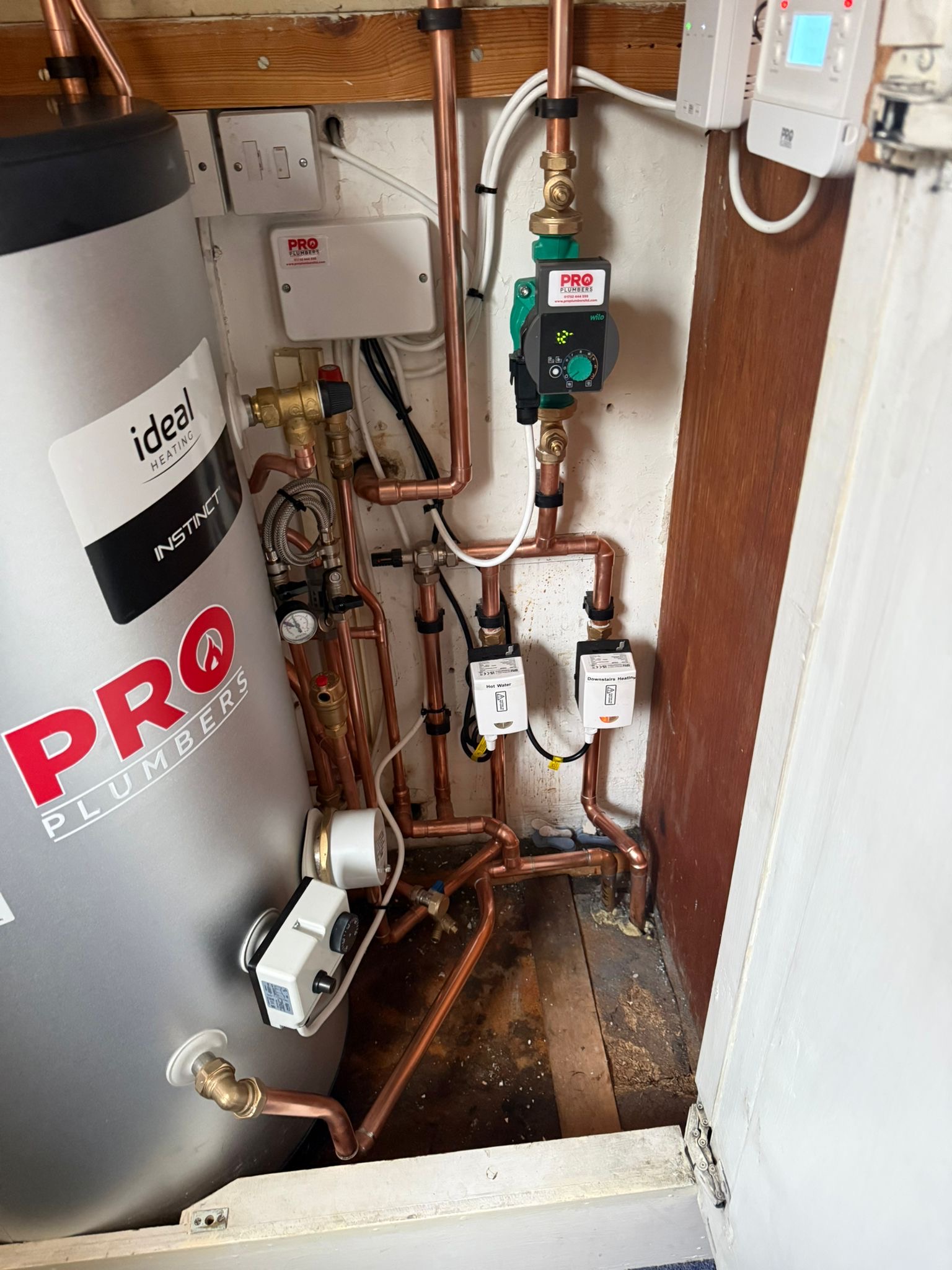
Water that has suddenly become much hotter at the tap needs attention, particularly if someone could be scalded before reacting. A control setting may have changed, a local blending arrangement may not be working, or the hot water system may be overheating. Do not assume that turning the tap down slightly makes continued use safe.
Keep children and anyone who needs assistance away from the affected outlets. Avoid testing the water with your hand, and do not dismantle controls to find a cause. The pattern across different taps can help an appropriately qualified professional decide what needs checking.
Treat an unexpected temperature rise as a safety issue
Stop using an outlet that delivers unexpectedly hot water until the risk has been assessed. A tap handle set to the same position as yesterday does not guarantee the same result today. Mixing can be affected by changes to either supply, and a sudden change is more significant than simply preferring a cooler setting.
Do not leave a bath filling unattended or ask someone else to test the temperature by touch. If a scald has occurred, seek appropriate first aid and medical advice promptly. Where steaming discharge, boiling sounds or unusually hot water occur together, move beyond routine observation and seek urgent professional help rather than waiting to see whether the next draw feels better.
Compare one outlet with a whole-house change
If only one mixer tap or shower is affected, the local cartridge, blending valve or supply arrangement may need attention. If hot outlets throughout the property have changed, the common source and its controls become more relevant. Neither pattern proves a particular fault, but the distinction can help focus an assessment.
Use what has already been noticed during normal use rather than deliberately opening every tap. Record whether the problem is constant or sudden and whether recent work affected the fixture. The guide to changing shower temperatures covers a related local symptom. Do not remove a mixer cartridge or alter a concealed blending valve while the system is potentially overheating.
Identify how your home produces hot water
A combi normally heats water as it flows, while a cylinder stores heated water for later use. A cylinder may receive heat from a boiler, an immersion source or both. The controls and potential faults differ, so advice aimed at a combi display may not apply to a cylinder thermostat or a valve serving stored water.
The boiler type guide explains the basic arrangements. Check accessible paperwork and normal user controls without opening covers. Tell the engineer which heat sources are present if known. If the installation is unfamiliar, describe the visible equipment rather than guessing, especially where a cylinder and boiler appear to have separate programmes.
A changed user setting is not the only explanation
A hot water setting may have been altered accidentally, or a control may be operating in a different mode. Review the normal user display and manufacturer instructions without making large changes. Record the original setting and any recent clock reset or control replacement, since that information may be useful during diagnosis.
Do not turn stored water controls progressively lower until taps seem comfortable. Storage temperature, hygiene control and safe delivery temperature must be considered together, and local mixing may be part of the design. A professional should resolve uncertainty about the intended arrangement. Avoid altering hidden limits or bypassing a control because the visible dial does not seem to change the result.
Stored water overheating needs qualified investigation
A cylinder thermostat or another part of the heat-control arrangement may fail to stop heating as intended. A valve or immersion-related fault can also require investigation. If the source continues adding heat when it should not, adjusting a tap cannot correct the problem. Safety cut-outs and relief devices must remain intact and must never be treated as normal operating controls.
Unvented cylinder investigation and work require a G3-qualified engineer. The hot water cylinder page provides the relevant service context. Do not remove thermostat covers, reset concealed cut-outs or attempt component repairs. A problem with the connected gas boiler must be handled by a Gas Safe registered engineer with the appropriate competence.
Local blending depends on both supplies working properly
A thermostatic mixing valve is intended to blend supplies to control delivery at the outlets it serves. Its performance can be affected by a fault, contamination or unsuitable supply conditions. Not every tap has one, and not every thermostatic fitting behaves identically. A comfortable temperature elsewhere does not prove that an affected outlet is adequately protected.
Record whether the problem began after work on a tap, shower or water supply. Do not compensate by adjusting a concealed valve without knowing the design and testing requirements. A suitable professional can assess the mixer and supply conditions together. This is especially important where an outlet is used by someone who may not be able to move away from hot water quickly.
Stop heating when discharge or boiling suggests danger
If water is steaming, a cylinder is making boiling noises or safety discharge is unusually hot or forceful, keep people away and seek urgent advice. Stop the hot water heat sources through normal accessible controls if safe. Do not touch wet equipment, approach hot pipework or operate relief valves to release heat manually.
Do not obstruct a tundish or external discharge pipe. Water and stored heat can remain hazardous after the controls are off. For background on the safety arrangement, see unvented cylinders and G3 competence. Gas smells or suspected carbon monoxide exposure require leaving the property and obtaining emergency assistance, not continuing hot water checks or waiting for an online response.
Explain the symptom before requesting an adjustment
Useful information includes which outlets are affected, when the change began, whether the water varies during use and any recent controls or plumbing work. Include the system type and accessible model details, but do not restart equipment stopped for safety just to gather evidence. Mention discharge or boiling sounds at the beginning of the conversation.
For a gas appliance issue, see boiler repair information. For a non-emergency enquiry, describe the overheating concern and say whether an unvented cylinder is present. The aim is to establish why safe delivery has changed, then address the source or mixing arrangement appropriately rather than relying on users to avoid the hottest tap position.