
Pro Plumbers · 27 November 2026
What is a combi boiler and how does it supply hot water?
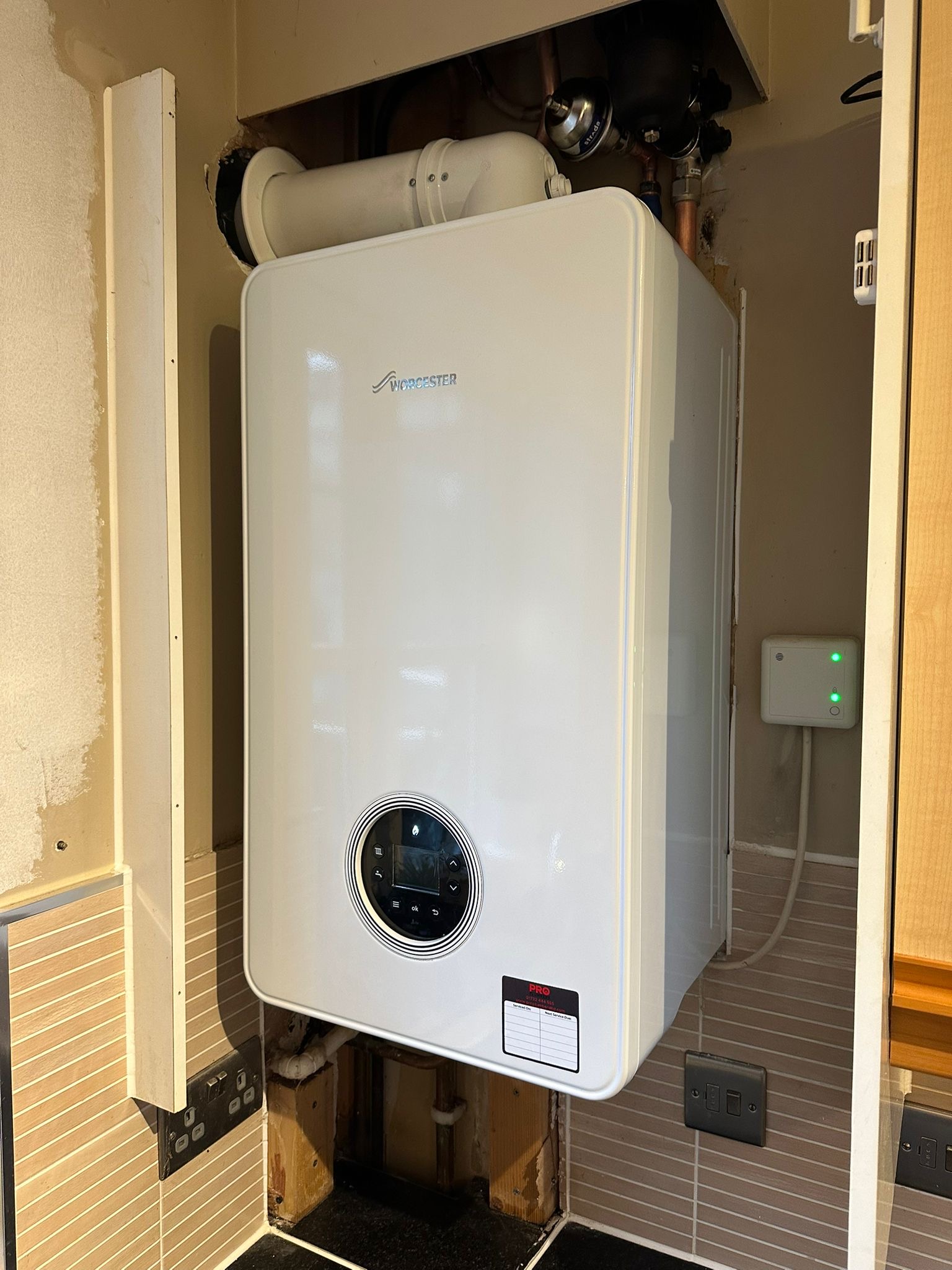
A combi boiler combines central heating and hot water production within one appliance. In a usual domestic arrangement, it heats water for taps when a hot tap is opened rather than storing that hot water in a separate cylinder. That simple definition explains the name, but it does not mean every home has the same pressure, controls or hot water performance.
If you are looking at an unfamiliar property or discussing a replacement, it helps to understand the two jobs the boiler performs. This is an explanation of what a combi does, not a recommendation that every household should convert to one. Suitability still needs an assessment of the building, water supply and way the rooms are used.
One appliance serves two different water circuits
The water circulating through radiators belongs to the central heating circuit. The water arriving at a hot tap belongs to the household water supply. These are not meant to mix simply because they are heated by the same appliance. The boiler transfers heat to the appropriate circuit through its designed internal arrangement.
This distinction matters when reading a gauge. The boiler pressure gauge usually relates to the sealed heating circuit, not the strength of water flowing from a shower. Turning up heating pressure is therefore not a way to improve tap performance. Internal heat transfer components and changeover mechanisms are work for an engineer, not parts to investigate by removing the casing.
Opening a hot tap creates a demand
When hot water is requested, the appliance recognises the demand and heats the incoming water. On many domestic combis, hot water takes priority over radiator heating while the tap is running. The exact behaviour depends on the model and controls, so the manual remains the best guide to what is normal for that appliance.
There can still be a wait before warm water reaches a distant outlet because water already in the pipe must pass through first. A combi does not remove that pipe distance. If the tap never warms, or changes temperature unexpectedly, the issue needs investigation rather than an assumption that all combis behave that way.
No separate cylinder does not mean unlimited output
The available hot water depends on the appliance’s capacity and the incoming water conditions. Opening several outlets together can divide the available flow. A larger model is not automatically the answer if the mains supply cannot provide what those outlets need. Both supply and appliance performance must be considered together.
Make a list of the taps and showers you expect to use at the same time. Include future bathroom changes if they are genuinely planned. Our boiler sizing guide explains why heating demand and hot water demand are separate considerations. Avoid choosing solely by a number in a product listing.
The water supply influences the experience at taps
A combi typically uses incoming mains water for domestic hot water. Pressure and flow are different measurements, and both can matter when assessing whether a proposed arrangement will work well. A strong stream at one tap does not prove that every shower will perform as expected when other outlets are open.
Tell the assessor if your present supply weakens at particular times or whenever another tap is used. Restrictions in the home’s pipework may also need attention. Do not fit a pump or alter supply fittings without an assessment of suitability and applicable requirements. The aim is to match the installation to the actual supply, not to promise a particular shower experience.
Heating controls still have their own job
The programmer and room thermostat tell the heating side when warmth is wanted. Radiator valves influence heat delivery around the rooms. These controls do not replace the boiler’s own protective devices or determine whether gas combustion is safe. A room getting warm is therefore not evidence that every part of the installation is sound.
Read the instructions for the controls already fitted before adjusting them. If heating does not respond but tap water works, that can be useful information for an engineer because the two functions can fail differently. Avoid repeated resets or changing every setting at once. Keep a note of what changed and when the symptom began.
Installation needs more than a convenient cupboard
The chosen location must suit the appliance, flue, water and gas connections, condensate disposal, access and maintenance requirements. The wall space alone is not enough to establish suitability. Existing cupboards or building alterations can affect access and flue arrangements, even if a previous boiler occupied the same position.
Gas combi installation and gas-related repairs require a Gas Safe registered engineer appropriately qualified for the work. If changing from stored hot water, the wider plumbing arrangement needs careful consideration too. Discuss the whole proposal through our gas boiler installation service, rather than assuming that removing a cylinder is the only change involved.
Identify the system without opening the boiler
Useful clues include the appliance manual, installation records and whether there is a separate hot water cylinder. A label on accessible paperwork may state that the boiler is a combination model. Some homes have unusual or modified arrangements, so these clues are not a substitute for checking the actual system.
Do not disconnect pipes or remove covers to confirm your guess. If your question is which boiler type suits your household, the combi, system and regular boiler comparison considers those choices separately. To explain your present arrangement and discuss suitable options, contact Pro Plumbers or call 01732 444555 with your appliance details and household requirements.