
Pro Plumbers · 24 November 2026
What does a boiler condensate pipe do?
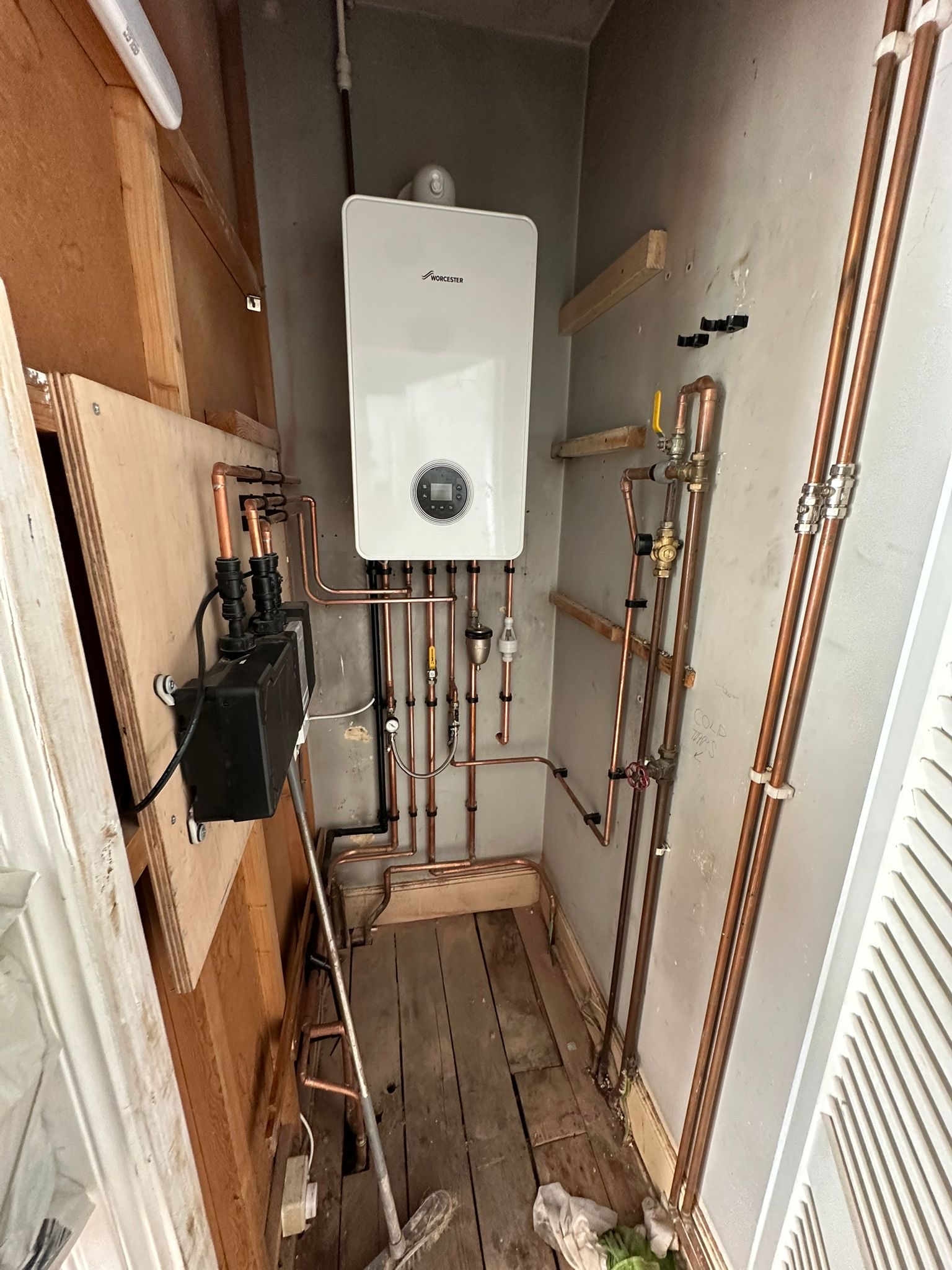
A condensing boiler extracts useful heat from its combustion gases. As those gases cool, some of the water vapour they contain turns into liquid. That liquid is called condensate, and a dedicated drain carries it away. The pipe is therefore a working part of the boiler's drainage arrangement, not an unused overflow that can be capped.
Understanding its job helps you distinguish expected water movement from a leak or a safety discharge. This article focuses on identifying and looking after the drainage route in general terms. It is not a guide to opening the boiler, cleaning its internal trap or changing a connection that may affect the appliance's safe operation.
Why the water is produced during normal operation
Burning fuel produces water vapour as part of the combustion process. In a condensing appliance, recovering additional heat cools the gases enough for some vapour to condense. The quantity changes with how the boiler is operating, so a fixed amount of water is not a useful household test. The liquid is mildly acidic and needs a suitable drainage arrangement.
A boiler may release condensate in batches because of the way its internal trap operates, rather than as one continuous trickle. Water moving through the correctly connected pipe while the appliance runs can therefore be normal. Water escaping onto a floor, staining a joint or appearing from the casing is a different observation and should be reported.
Identify the route without disturbing the appliance
Condensate pipework is generally plastic rather than the metal pipe used for some other boiler connections. It may run towards an internal waste connection, a suitable drain or another approved disposal arrangement. Routing varies, so a plastic pipe near a boiler should not be identified by appearance alone. The appliance instructions and installation paperwork can help explain it.
Trace only sections that are visible and easy to inspect from a safe position. Do not climb to follow a high outlet, pull off the boiler cover or disconnect fittings. If several pipes converge, photograph the arrangement instead of guessing. The engineer can distinguish the drainage pipe from water supplies and safety outlets during a boiler service or repair assessment.
Do not confuse it with a pressure relief discharge
A sealed heating system has a pressure relief arrangement to discharge water if pressure becomes excessive. Its outlet performs a different function from the condensate drain. Water from an external metal discharge pipe can indicate a pressure problem, even though water in the condensate route is expected. Mixing up the two can lead to the wrong diagnosis.
If the heating gauge has changed unusually and an outlet is dripping, note both observations. Our guide to water around a boiler separates leak locations. Never cap, plug or redirect an outlet because it is wet. Blocking a drainage or safety route can create a more serious fault than the visible drip you are trying to stop.
The internal trap is not a routine owner cleaning job
The condensate trap forms part of the boiler's drainage system and helps maintain the intended separation between the appliance and its drain. Its design and servicing procedure depend on the model. Removing it, leaving it incorrectly fitted or omitting a required step after cleaning can affect safe operation, so general internet instructions are not a substitute for the appliance procedure.
A gurgling noise does not prove the trap needs cleaning, nor does it justify removing it. Report when the sound occurs, whether the boiler stops and whether nearby wastes drain normally. Inspection of components within a gas boiler belongs with an appropriately qualified Gas Safe registered engineer. A homeowner's contribution is a clear symptom report and access to existing paperwork.
A downstream waste problem can affect the boiler
Some condensate pipes connect into household waste plumbing. If that shared route becomes obstructed, condensate may have difficulty draining even though the fault begins away from the appliance. A sink that drains slowly at the same time as a boiler drainage complaint is worth mentioning. It is a clue for investigation, not proof of where the restriction lies.
Do not pour drain chemicals into the boiler pipe or attempt to clear it with compressed air. Those approaches can damage components or push contamination towards the appliance. The remedy depends on the connection and location of the obstruction. Keep ordinary waste symptoms and boiler fault information together when enquiring so the drainage route can be assessed coherently.
Exposed pipework needs appropriate installation
An outside section can be vulnerable in cold weather, particularly where water has opportunities to collect. The route, fall, materials and weather protection need to follow the applicable appliance and installation guidance. Changing the pipe diameter, adding random insulation or moving the outlet without assessment is not a reliable solution to repeated freezing or poor drainage.
If the boiler fails during freezing conditions and the accessible condensate section appears frozen, our frozen condensate guide addresses that separate situation. This article does not repeat a thawing procedure. For recurring problems, describe where the pipe runs and whether the same location is affected each time, then discuss a suitable installation remedy.
Leaks and unusual sounds need a location record
A leaking plastic joint, water collecting at a wall entry or a new smell around a waste connection can each have a different explanation. Note the exact place rather than describing everything as a boiler leak. Take a photograph if safe, and record whether it happens only while the boiler runs or also when other fixtures discharge.
If water reaches electrical equipment or comes from the appliance casing, stop using the boiler and seek advice. Do not reach into wet wiring or dismantle covers. Error codes should be copied exactly from the display, without repeated resets to keep the appliance running. Boiler repair starts with identifying the fault rather than assuming all drainage noises mean a frozen pipe.
Ask about the drainage when replacing the boiler
A replacement boiler still needs a suitable condensate disposal route. Existing drainage should be considered as part of the installation, especially where the previous appliance had recurring blockage or cold-weather problems. Tell the installer about those experiences before work is planned. A different boiler does not automatically correct an unsuitable connection beyond it.
Pro Plumbers provides boiler installation and servicing. To discuss an uncertain outlet or a recurring drainage symptom, send us the model and photographs of the visible pipework or call 01732 444555. Leave the appliance and its outlets intact while the correct route and next steps are established.