
Pro Plumbers · 27 November 2026
How long does a boiler last? Condition matters more than age
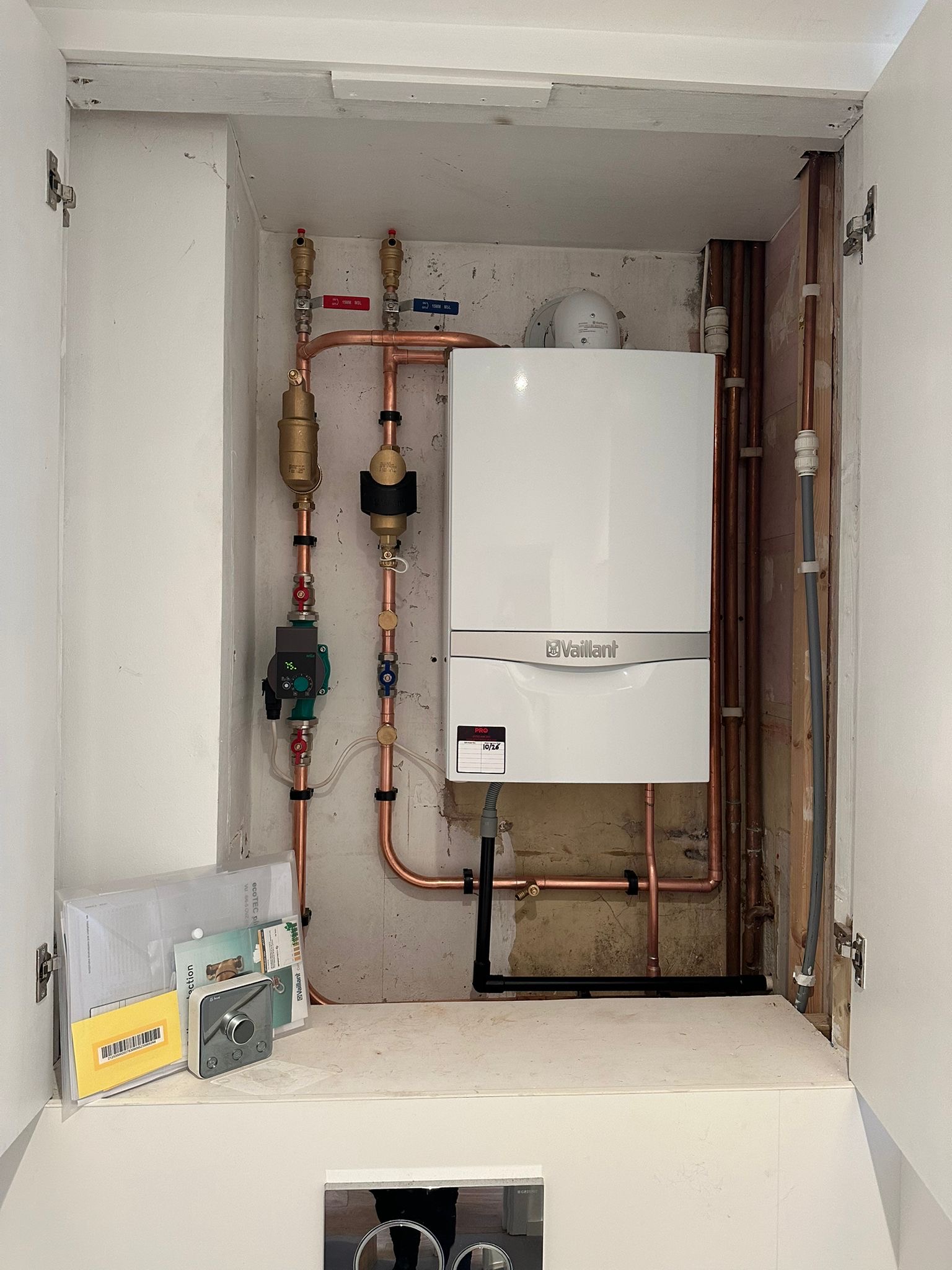
There is no birthday on which every boiler becomes unsafe or must be replaced. Two appliances installed at the same time can have different histories, operating conditions and prospects for further use. The useful question is not whether your boiler has reached a general age quoted online, but whether this particular installation can continue to operate safely and be maintained sensibly.
This guide looks at the factors behind boiler lifespan without assigning a universal number of years. It helps you gather evidence before speaking to an engineer. Age is worth knowing, but it belongs alongside condition, maintenance, repair history and the needs of the home rather than acting as the decision on its own.
Establish the age from records rather than appearance
Installation paperwork, service records and the appliance model can help establish when a boiler was fitted. A manufacturing date and an installation date are not necessarily identical. If you moved into the property after the installation, keep that uncertainty clear instead of treating an estimate from the previous owner as a confirmed fact.
Do not open the casing to search for a label. Look at accessible documents or ask the engineer to identify the appliance during a legitimate assessment. Appearance can be misleading: a clean outer cover says little about internal wear, while a dated style does not prove that the boiler has reached the end of its useful life.
Maintenance history adds context to the calendar
Records show whether the appliance has received attention and what findings were reported. They can also reveal an unresolved recommendation that deserves follow-up. A gap in paperwork does not prove that no maintenance occurred, but it leaves less evidence for assessing how the boiler has been looked after.
For a gas appliance, maintenance requires a Gas Safe registered engineer with the appropriate scope. Homeowner cleaning around the outside is not a substitute for professional checks. Our boiler servicing information explains the service context. Ask for the findings to be recorded so that future decisions can be based on something more useful than a vague memory.
The surrounding heating system influences wear
A boiler operates as part of a connected system. Circulation problems, water quality issues or recurring pressure loss may affect its operation. Replacing an appliance without understanding those conditions can leave the new installation exposed to a problem that belonged to the wider system rather than the old boiler alone.
Report repeated topping up, persistent cold areas or unusual operating behaviour during an assessment. These observations do not diagnose wear themselves, but they help the engineer decide what to investigate. Avoid adding chemicals, adjusting internal components or changing protective fittings in an attempt to prolong life. Any treatment needs to suit the system and manufacturer’s requirements.
One repair is not the same as a pattern of failures
An isolated, repairable fault does not automatically indicate that the whole appliance is worn out. Conversely, repeated interruptions deserve a review of why they are recurring. Keep the dates, symptoms and work descriptions so the engineer can distinguish unrelated incidents from repeated attempts to address the same underlying problem.
Ask whether the identified fault is confined to a replaceable component or points to wider deterioration. A repair can restore function without making an appliance new again, and its purpose should be described honestly. The boiler repair service is a route to discussing the present fault before drawing conclusions about remaining life.
Spare parts can affect continued repairability
Even a boiler that has operated reliably may become harder to maintain if correctly matched components are no longer readily available. Availability depends on the model and required part, not simply whether the manufacturer still sells boilers. An online listing alone does not establish that a component is genuine, suitable or obtainable for your appliance.
Ask the engineer to explain any parts constraint and how certain that assessment is. Do not install a supposedly compatible component yourself. For gas appliances, correct identification, fitting and subsequent safety checks are professional responsibilities. A discussion about availability should stay separate from a blanket statement that every appliance of a particular age must be replaced.
Safety findings outweigh an expected lifespan
If an appliance is found unsafe, instructions about stopping its use must be followed regardless of its age. A newer boiler is not exempt from unsafe installation or damage. Equally, continued operation does not prove safety: heat arriving at radiators tells you that heat was produced, not that combustion and the flue have been checked.
A gas smell calls for leaving the property, avoiding switches and calling 0800 111 999 first. A carbon monoxide alarm or suspected exposure needs urgent action and fresh air. Do not keep using the appliance because an online lifespan estimate suggests it should still be working. Have gas-related safety concerns assessed by a Gas Safe registered engineer.
Household changes can alter suitability without ending life
An extension, different hot water demands or a changed occupancy pattern can make an existing setup less suitable even when the appliance remains repairable. That is a capacity or design question, not necessarily evidence of failure. Describe what has changed so that the assessment does not confuse increased demand with deterioration.
Energy use also needs context, including weather and settings; a bill alone cannot establish remaining life. The repair or replace guide addresses the eventual choice. To arrange an assessment, send the available records and your concerns or call 01732 444555. Ask for a condition-based explanation, not a prediction that cannot be guaranteed.