Pro Plumbers · 29 October 2026
Boiler pressure too high: causes and safe ways to respond
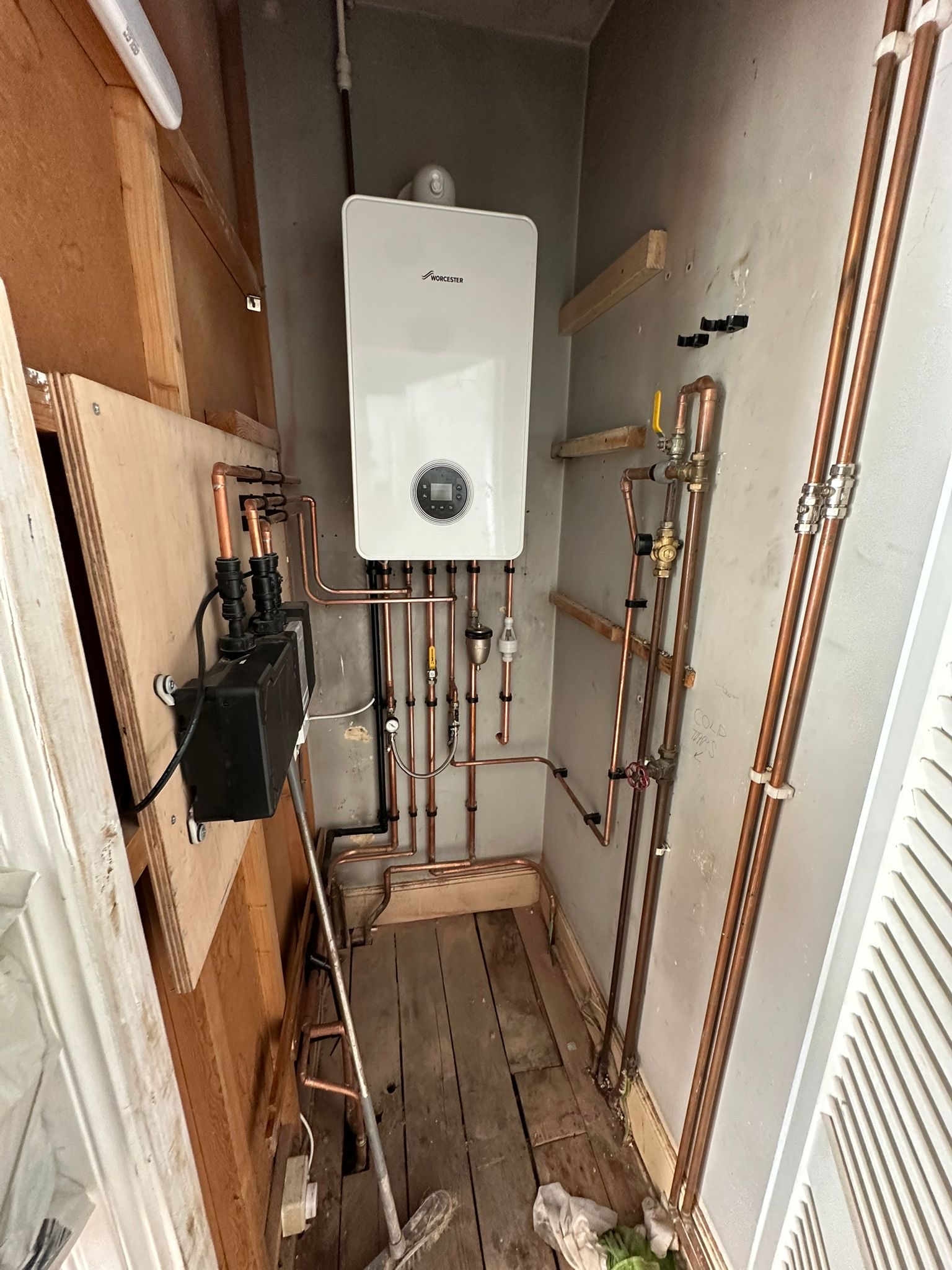
A boiler pressure gauge that reads too high usually means excess water has entered the heating circuit, or the system cannot accommodate water expanding as it heats. Typical cold pressure is around 1–1.5 bar, but follow your manufacturer's figure. Around 3 bar is where the pressure relief valve usually opens. Do not treat that as a pressure to aim for.
Read the gauge with the heating cold
Switch the heating off using the normal controls and allow the system to cool before judging the reading. Pressure normally rises during heating, so comparing a hot reading with a cold target can be misleading. Check the user manual for your model's recommended cold range and any warning symbols on its display.
Note the cold reading, whether anyone recently topped up the system, and how far the needle rises during normal use. If it is already near the relief threshold, rising rapidly, or accompanied by discharge, leave the heating off and arrange assessment. Do not run it simply to gather another reading.
Why extra water or lost expansion capacity raises pressure
A filling loop that has not fully shut
The filling loop connects the mains water supply to the sealed heating circuit for topping up. A tap left partly open can keep admitting water. A valve can also be letting by: water passes through internally even though its handle appears closed. Pressure that creeps upwards while the heating is cold and off makes this a useful possibility to report, not a confirmed diagnosis.
Too much water added during a recent top-up
If the gauge rose straight after filling, overfilling may explain it. Stop adding water immediately. Follow the manufacturer's instructions to identify the filling controls and check that their taps are closed. Do not force stiff handles, turn unidentified valves or remove connections. Some boilers have an integrated filling arrangement rather than a separate loop.
An expansion vessel without its working charge
The expansion vessel provides space for heated water to expand. If its gas charge is lost or the vessel develops a fault, pressure may climb sharply as the heating warms and fall again as it cools. This pattern needs investigation rather than repeated draining and topping up. Recharging or replacing the vessel is work for a Gas Safe registered engineer.
Lower a small overfill only when everything is cool
If the manual permits it, the system is cold and the problem appears to be a small, recent overfill, bleeding a radiator can release a little water and lower pressure slightly. This is a limited homeowner check, not a repair for a recurring fault.
- Turn the heating off and wait until the radiators are cool. Protect the floor with towels and have a suitable container ready.
- Use a radiator key to open the bleed screw slightly. Keep the screw in place and protect your hands from any residual warmth.
- Release only a small amount, close the screw gently, then check the boiler gauge. Stop once the manufacturer's cold target is reached.
- If the screw leaks afterwards, will not turn easily, or the pressure rises again, stop and seek help.
Never use the boiler's pressure relief valve as a draining tap. Do not open the casing, attempt an internal drain-down or keep removing water to compensate for a filling valve that will not shut.
What an outside dripping pipe can tell you
A pressure relief valve may discharge through a pipe terminating outside. Look from a safe position for dripping or recent wet marks; do not touch the outlet because discharged water may be hot. A condensate pipe can also carry water outside during normal operation, so describe what you see rather than assuming every drip is a relief-valve fault.
Never cap, plug or obstruct a discharge pipe. Once a relief valve has opened, debris or damage may stop it resealing properly. PRV replacement, filling-valve repairs and all internal boiler work belong with a Gas Safe registered engineer. If pressure subsequently falls, our guide to a boiler losing pressure covers that different symptom.
Arrange help for pressure that returns or keeps climbing
Book boiler repair and pressure-fault assessment if pressure rises despite closed filling taps, swings markedly between hot and cold, or causes repeated discharge. Tell the engineer your readings and when they occurred. A photograph of the gauge and visible pipework can help without removing any covers.
If you suspect a gas leak or carbon monoxide, leave the property, opening doors and windows if safe. Call the National Gas Emergency Service on 0800 111 999 from outside. Do not use the appliance until a Gas Safe registered engineer has checked it.
For help with a high boiler pressure reading, call 01732 444555 or use our quote form to describe the pressure problem.