
Pro Plumbers · 27 November 2026
Why does my boiler pilot light keep going out?
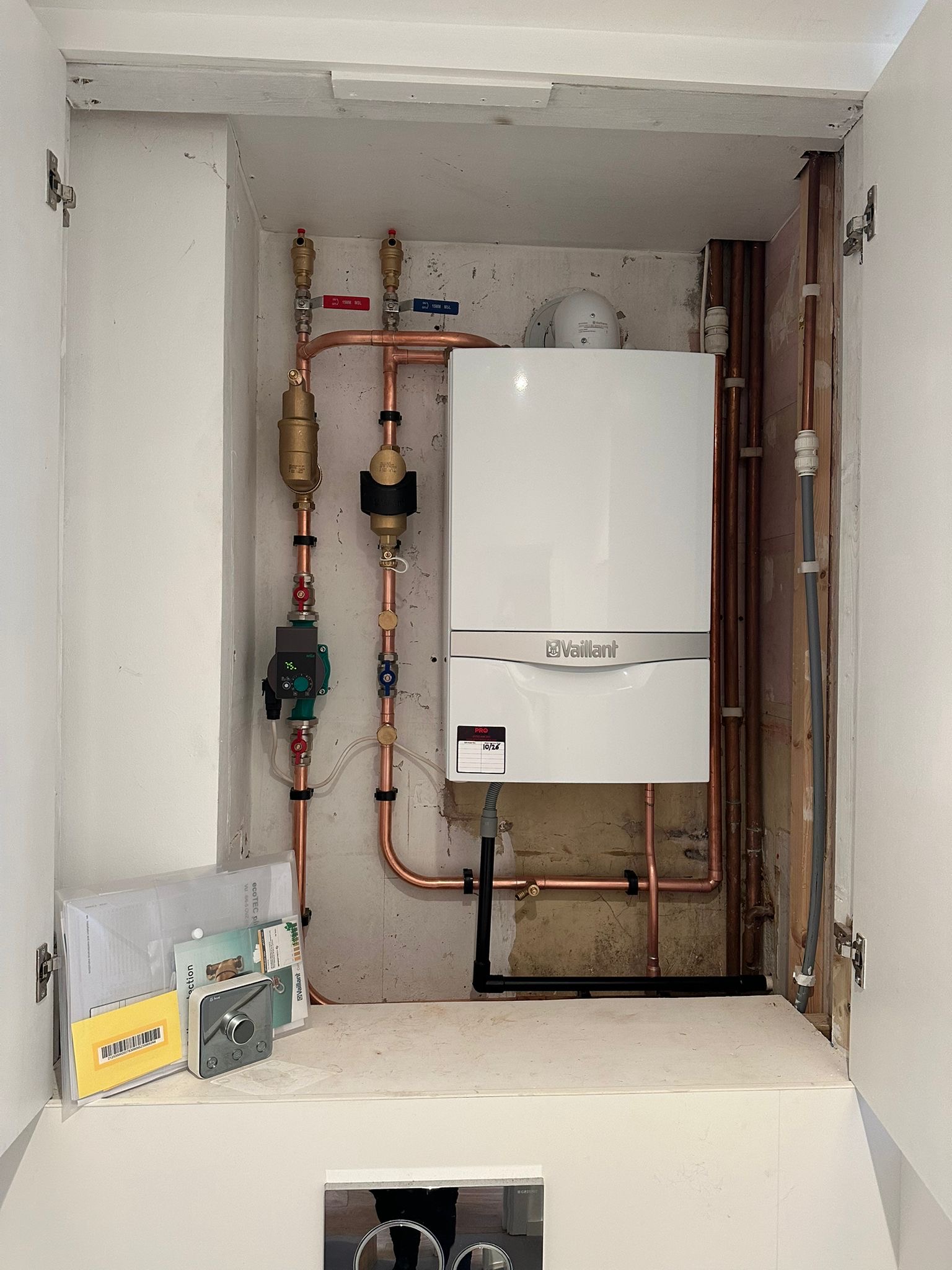
An older boiler with a standing pilot uses a small flame as part of its ignition arrangement. If that flame keeps going out, something needs investigating. Repeated attempts to restore it can conceal a fault and encourage continued use of an appliance whose safety has not been established. Leave gas appliance diagnosis and repair to a Gas Safe registered engineer.
Many modern boilers do not have a standing pilot at all. A flashing symbol or ignition error can be mistaken for the same problem, but it needs an assessment based on the actual model rather than advice intended for an older appliance.
Confirm what the boiler actually uses for ignition
Look at the user manual or accessible appliance details to establish whether the boiler has a permanent pilot or electronic ignition. Do not remove any panel or combustion cover to look for a flame. An indicator on the front may describe a demand, a burner state or a fault rather than a visible pilot.
Write down the complete error message and boiler model if they are available without dismantling anything. Distinguishing a pilot that goes out from a boiler that fails to ignite helps an engineer prepare for the visit. The boiler repair page is the relevant service route for either symptom, but neither should be diagnosed from a symbol alone.
Flame supervision is there to prevent unsafe gas flow
On some older boilers, a thermocouple forms part of the arrangement that confirms a pilot flame is present. If the flame is lost, the safety mechanism is intended to stop the relevant gas supply. A fault in that arrangement can be associated with a pilot that will not remain established, but the component is not automatically the cause.
Do not bridge, hold open or bypass a safety device. Nor should a generic replacement part be selected from a description of the symptom. The engineer needs to assess the complete appliance and the reason the flame is not being maintained. A safety mechanism operating is a reason for investigation, not an obstacle to keep overriding.
Draught-related symptoms still require professional checks
Windy weather or a door opening may appear to coincide with the pilot going out. That pattern can be useful evidence, but it does not establish that a normal draught is the whole explanation. Flue condition, terminal surroundings and the appliance's combustion arrangement may need assessment before continued use can be considered safe.
Never cover a ventilation grille, add a makeshift shield or alter the flue to stop air movement. Ventilation may be essential to the appliance. Mention recent building alterations, new extraction arrangements or changes around the terminal when arranging a visit. Keep observations external and accessible, and leave all gas boiler flue investigation to a Gas Safe registered engineer.
The pilot assembly is not a homeowner cleaning task
Deposits, deterioration or a problem with the pilot assembly may affect flame stability. However, the appearance of a small flame does not tell a householder whether fuel supply, combustion and safety operation are correct. Advice to clean an opening with a pin or move a sensing component is not a safe substitute for testing.
Do not loosen fittings, adjust the flame or try to clear gas passages. Work on these parts belongs to a Gas Safe registered engineer with the relevant appliance competence. Our gas engineer information explains the appropriate service context. Report any visible staining from a normal viewing position, without opening the boiler to obtain a better photograph.
Avoid turning a recurring fault into a reset routine
If the appliance repeatedly fails, leave it off using its normal controls and arrange an inspection. Do not keep trying to light it or repeatedly press a reset button to obtain a short period of heat. A temporary return to operation does not demonstrate that the underlying fault has cleared or that combustion is satisfactory.
Tell the engineer whether the boiler stopped during heating demand, after a hot water cycle or while apparently idle. Include the frequency and any displayed message, rather than trying to recreate the failure. If the boiler has already been turned off, it does not need to be restarted for the sake of showing the symptom during an initial enquiry.
Gas smells and carbon monoxide warnings change the response
If you smell gas, do not attempt ignition or operate electrical switches. Avoid flames, leave the property and call the National Gas Emergency Service from outside. Do not re-enter until advised it is safe. A suspected gas escape requires emergency assistance rather than a normal repair booking or a reply to an online message.
Carbon monoxide has no smell. An alarm sounding or symptoms such as headache, dizziness and nausea require getting everyone into fresh air and seeking urgent help. Obtain emergency medical assistance for anyone who is unwell. The carbon monoxide alarm guide gives further context, but do not delay leaving to read more advice.
Servicing and repair answer different questions
A service is a planned opportunity to examine appliance condition and operation. An existing recurring pilot fault needs to be described when booking so that it is not treated as an unreported background issue. Service history can help, but previous checks do not establish that a newly faulty boiler is safe to keep using.
See boiler servicing information for the planned maintenance context. Bring any previous warnings, repair records and installation documents into the conversation. The engineer can explain what tests are needed for the present problem. Do not assume an old diagnosis still applies just because the boiler has shown a similar symptom before.
Make an informed decision after the fault is identified
A repair decision depends on the condition of the appliance, the actual defect and the availability of suitable parts. A pilot problem alone does not establish that a boiler must be replaced, nor does the possibility of replacing one component establish that the complete installation is satisfactory. Ask for the findings and available options to be explained clearly.
Check how to verify Gas Safe registration, including the relevant work categories. For a non-emergency enquiry, describe the recurring ignition problem with the model and observations. Keep the appliance off if a fault is suspected, and follow any safety instructions given after inspection rather than returning to repeated relighting.