
Pro Plumbers · 27 November 2026
Why is my indoor air conditioning unit leaking water?
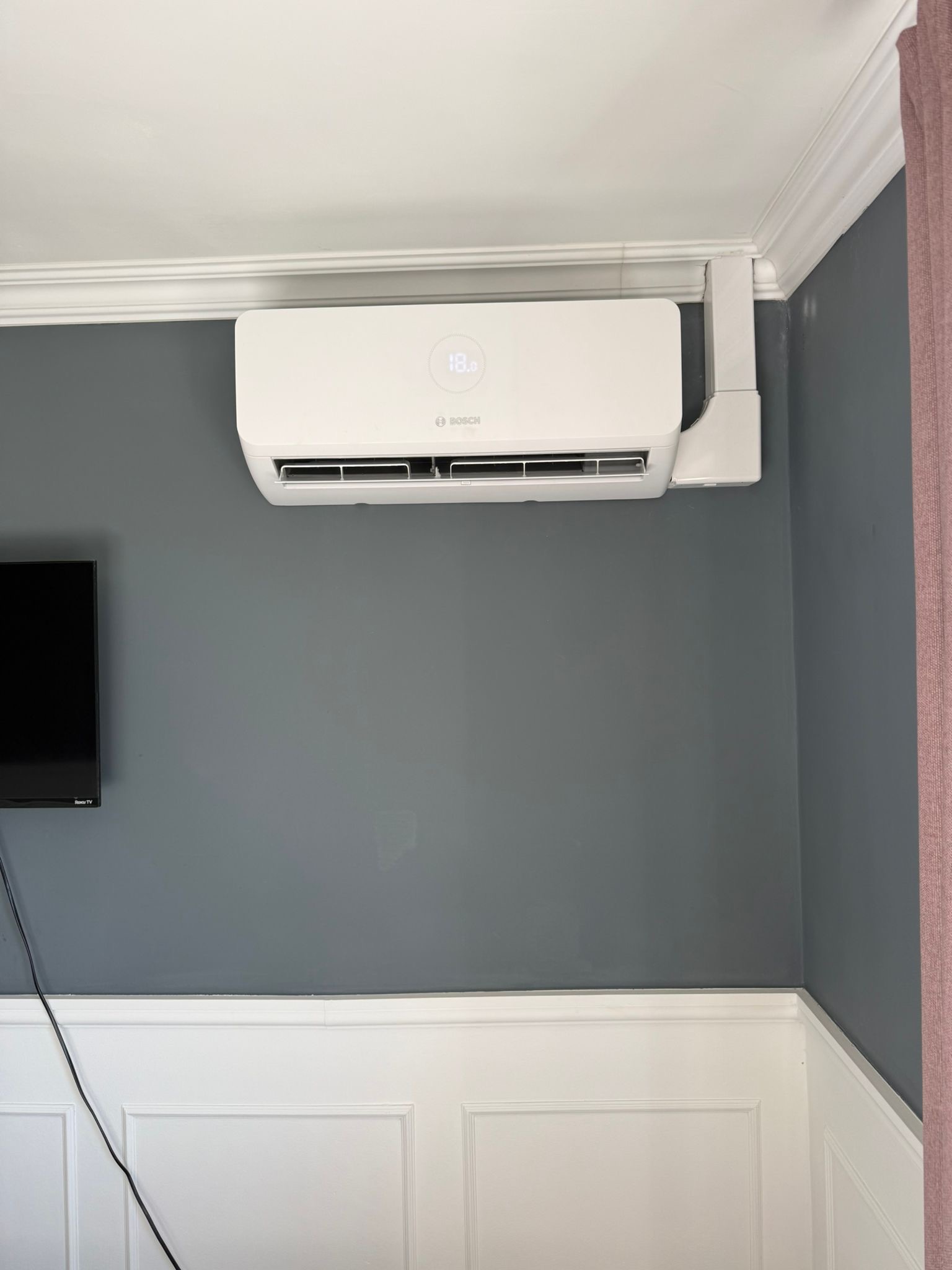
Water dripping from an indoor air conditioning unit needs attention even if the room still feels cool. During cooling, moisture from the air collects on the cold indoor coil and should drain through the equipment's condensate arrangement. Water escaping over the casing or wall means that moisture is not being contained or carried away as intended.
Switch the unit off through its normal controls if it is safe to do so. Move nearby belongings and keep people away from wet flooring. If water is near electrical fittings, do not touch the fittings or wet equipment. This is not a reason to remove the cover and search inside while the unit is running.
Distinguish an indoor drip from normal drainage outside
An external drain outlet may discharge water during cooling, depending on how the installation is arranged. That is different from water coming through the indoor casing, tracking down a wall or wetting the ceiling. Note where the first moisture appears rather than assuming that the largest puddle identifies its source.
Water can travel along a surface before falling, so a mark below a pipe route does not establish which connection has failed. Photograph the visible pattern without disturbing insulation or boxing. If the source might instead be nearby plumbing, mention that uncertainty. The sink trap leak guide describes another source of localised household water escape, not an air conditioning repair method.
Understand the job of the condensate drain
The indoor unit usually collects cooling moisture in a tray and passes it towards a drain. Depending on the installation, gravity or a condensate pump carries it away. If the route is restricted, disconnected or not arranged correctly, water can collect where it should not and eventually escape into the room.
Do not pour cleaning chemicals into the unit, push wire through the outlet or try to clear the drain with compressed air. Hidden joints and small components can be damaged or displaced. A visible drain end tells you little about the entire route. Proper investigation needs to establish how the tray, pipe and any pump work together.
Notice when the leak starts during operation
Timing can help distinguish different possibilities. Record whether the drip starts soon after cooling begins, develops after a longer period or appears after the unit has stopped. Note whether the room was especially humid or whether the leak followed a period of weak airflow. These are clues rather than tests that prove a particular defect.
Do not run the equipment again just to create a better video. Existing photographs, water marks and a description of the last operating period are enough to begin a discussion. If water continues after shutdown, residual moisture or thawing ice may be involved, but continued leakage still needs assessment rather than an assumption that it will resolve itself.
Look for icing without trying to remove it
Visible frost or ice may be connected with restricted airflow or a fault in the refrigeration system. When it thaws, the resulting water can overwhelm normal collection or appear in unexpected places. Observe only what is visible without opening service compartments. Do not touch cold surfaces to judge how much ice is present.
Leave the system off and allow the engineer to advise on the next step. Do not scrape ice, use hot water or aim a hairdryer into the casing. Refrigerant work must be left to an appropriately qualified F-Gas engineer. A leak accompanied by icing needs the cause investigated, not simply the water mopped up between restarts.
Keep owner filter care separate from internal cleaning
An owner-accessible filter may be checked only as the manual permits, with the equipment shut down as instructed and the surrounding area safe and dry. A heavily soiled filter can affect airflow, but finding dust does not establish the entire cause of a leak. Some filters cannot be washed, so check the specific instructions.
Do not reach beyond the designated filter area to wipe a coil, move a tray or adjust wiring. Internal cleaning and drainage checks are different tasks from routine filter care. Our maintenance guide for air conditioning provides broader context. A clean filter is helpful maintenance, not proof that the drainage system is sound.
Consider pumps and pipe routes without opening them
Some installations use a small condensate pump because water cannot drain away by gravity alone. An unfamiliar noise, warning or change in the usual draining pattern is worth mentioning. Do not unplug, bypass or dismantle a pump, and do not assume that silence proves failure. Designs and control arrangements vary between systems.
From an accessible position, note any obviously displaced external pipe or new damage near the route. Leave concealed sections and connections undisturbed. If building work recently took place, describe it without blaming a particular trade before assessment. Our air conditioning repair page is the appropriate service reference for a suspected drainage or operating fault.
Limit damage while leaving the unit undisturbed
Use towels or a container beneath a drip only where these can be positioned without touching equipment or creating a trip hazard. Do not attach a collection bag to the unit or block its outlet with absorbent material. Heavy wet items can place extra strain on a casing that was not designed to carry them.
Keep furniture away from a damp wall and tell the property owner or managing agent where relevant. A bulging ceiling, extensive water escape or water near electrical equipment changes the urgency and requires appropriate help. Do not cut into the ceiling or remove the indoor unit to locate trapped water. Protecting the room must not introduce another hazard.
Provide the drainage history when requesting assessment
Gather the model details, the leak location and any information about a condensate pump. Explain whether the unit has leaked before and what happened immediately beforehand. Mention changes to decorations, pipe boxing or nearby drainage. There is no need to identify the failed component yourself before requesting assistance.
The air conditioning page sets out the relevant service area. To discuss the symptoms, use the contact form and include safe photographs if available. Keep the affected equipment off pending advice rather than testing whether the drip has disappeared. An apparently dry casing after shutdown does not show that the underlying drainage problem has been corrected.